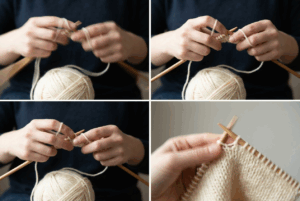
Knitting patterns are like roadmaps. They guide you from yarn and needles to a finished project. Yet for many beginners, the codes, abbreviations, and charts can feel overwhelming. This beginner’s guide to reading knitting patterns will help you break down the mystery so you can knit with confidence and ease.
Why Learn to Read Knitting Patterns?
Reading knitting patterns opens up a whole world of possibilities. Instead of being limited to video tutorials or simple instructions, you can tackle scarves, sweaters, socks, and more. Patterns are the universal language of knitters, and once you learn to read them, you’ll have endless creative freedom.
The Basics of Knitting Patterns
Most patterns follow a predictable structure. Once you understand the parts, they become far less intimidating.
Pattern Structure
Patterns usually start with:
- Project description
- Materials list (yarn, needles, notions)
- Gauge information
- Abbreviations and stitch glossary
- Step-by-step instructions
Abbreviations and Symbols
Knitting patterns use short forms like “K” for knit and “P” for purl. Symbols often represent stitches in charts.
Common Stitch Instructions
Every pattern builds on basic stitches—knit, purl, increases, decreases, and yarn overs.
How to Read Knitting Abbreviations
Abbreviations are at the heart of pattern reading. Here are some of the most common:
Knit (K) and Purl (P)
“K” means knit a stitch, and “P” means purl. Together, they create endless textures.
Increase (Inc) and Decrease (Dec)
“Inc” adds stitches, while “Dec” removes them to shape your fabric.
Yarn Over (YO)
“YO” means bring the yarn over the needle to create an intentional hole, often used in lace.
Understanding Pattern Repeats
Patterns often include repeats shown with asterisks (*) or parentheses. For example:
*K2, P2* repeat across row
This means you alternate knitting 2 stitches and purling 2 stitches across the row.
How to Read Charts in Knitting Patterns
Charts are visual maps of stitches.
What Charts Represent
Each square is a stitch, and symbols show which type.
Reading Flat vs. Circular Charts
- Flat knitting: Read odd rows right to left, even rows left to right.
- Circular knitting: Always read right to left.
Gauge and Why It Matters
Gauge tells you how many stitches and rows equal a specific measurement. Matching gauge ensures your finished project fits as intended. Always knit a swatch before starting.
Reading Pattern Notes and Materials Lists
Never skip the notes. They often contain:
- Special techniques
- Custom stitch explanations
- Adjustments for different sizes
Materials lists tell you exactly what yarn weight, needle size, and accessories you’ll need.
Tips for Following a Knitting Pattern Smoothly
Highlight or Mark Rows
Use a highlighter or sticky notes to keep track of your place.
Use Stitch Counters
Row counters and stitch markers prevent confusion, especially in lace or cable patterns.
Keep Track with a Notebook or App
Digital tools or old-fashioned notes help track progress.
Beginner Mistakes to Avoid
- Skipping the gauge swatch
- Ignoring abbreviations
- Losing track of rows or repeats
- Starting complex projects too soon
Avoiding these mistakes makes learning smoother and less frustrating.
Practice Patterns for Beginners
Start with easy patterns such as:
- Garter stitch scarves
- Ribbed headbands
- Dishcloths with simple repeats
These allow you to practice reading while building confidence.
How to Gain Confidence with Knitting Patterns
The more you read and practice, the more natural it becomes. Begin with simple patterns, highlight key parts, and move to complex designs once you feel comfortable. With time, you’ll be able to pick up any pattern and start knitting right away.
Conclusion: Patterns Open Creative Possibilities
Learning reading knitting patterns is like unlocking a secret code. Once you understand the structure, abbreviations, and charts, you can knit almost anything you imagine. With practice, patience, and the right tools, knitting patterns will become your best friend rather than a source of stress.
FAQ
1. What’s the hardest part about reading knitting patterns?
For most beginners, abbreviations and repeats are confusing, but practice makes them easy.
2. Do I have to learn charts to knit patterns?
Not always. Some patterns use only written instructions, but charts are helpful for lace and cables.
3. How do I keep from losing my place in a pattern?
Use row counters, stitch markers, or highlight your current row.
4. Can I knit without following patterns?
Yes, but patterns allow you to make complex and fitted projects more easily.
5. How long does it take to get comfortable with patterns?
Most knitters feel more confident after completing a few beginner-level projects.