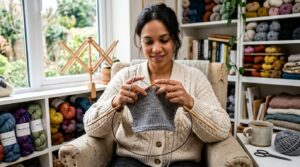
If you’ve ever stopped mid-row because your hands hurt or your fingers felt stiff, you’re not alone. Many knitters face hand strain, fatigue, or arthritis flare-ups. The good news? The right knitting gloves for support can make a big difference in how long you can craft without discomfort.
Why Knitters Need Hand Support
Knitting involves repetitive motions: gripping needles, pulling yarn, forming stitches. Over time, this puts stress on joints in the fingers, thumbs, and wrist. Conditions like arthritis, tendonitis, or carpal tunnel tend to flare up under these conditions. Supporting your hands helps keep the strain down, reduces swelling, and lets you enjoy knitting without dread of the next ache.
How Gloves Help Reduce Hand Strain
Support gloves often use compression to help improve circulation, reduce swelling, and stabilize joints. They hold your hands in gentler positions, distributing pressure more evenly. Gloves also help retain warmth, which loosens stiff joints. Fingerless or open-finger designs let you maintain dexterity, so you can still knit without fumbling.
Key Features to Look for in Knitting Gloves for Support
Compression Level & Material
Mild to moderate compression (often measured in mmHg) can help. Materials like spandex/nylon blends, copper-infused fibers, or breathable elastic mixes tend to work best. They stretch but stay snug. Too much compression can cut off circulation.
Fingerless vs Full-Finger Gloves
Fingerless gloves leave fingertips exposed for tactile work and detailed stitches. Full-finger gloves are warmer and provide coverage but can make fine work harder. Many knitters prefer fingerless support gloves during knitting sessions.
Grip, Palm & Wrist Support
Some gloves have grip dots or slight textured palms to help hold needles or yarn. Others include wrist support or compression wraps that extend toward the wrist. Good gloves support the wrist too, since many knitters’ pain radiates from wrist toward hand.
Breathability and Fit
Gloves that are too warm or tight can cause sweating or discomfort. Breathable materials, seamless designs, and correct size help. Look for gloves with open finger tips, or gloves designed with ventilation or mesh.
Easy to Wash & Durable
Because gloves will see a lot of movement and sometimes hand-washing, durability matters. Materials that wash well, seams that don’t fray, and gloves that retain compression over time are more cost-effective.
Types of Support Gloves for Knitters
Compression & Arthritis Gloves
These are gloves designed specifically for joint issues. They provide constant pressure, warmth, and often come in designs that allow work and knitting. Some are copper-infused or have features to ease swelling. The Creative Folk –
Fingerless Craft or Quilters’ Gloves
These leave fingers free, giving you tactile control while offering support to the palm. Good for knitters who want both support and dexterity. KnitPal+1
Full-Finger Warmth Gloves
If you knit in cooler environments or have cold sensitivity in your fingers, full-finger gloves add warmth. But choose ones with thinner fingers or stretch so you can still feel stitches.
Grip-Enhanced Gloves
Textured palm/glove grips help prevent needle slipping and reduce tension in hands from holding tools too tightly. Some support gloves incorporate non-slip surfaces. Amazon+1
Best Knitting Gloves for Support & Comfort
Here are several products that knitters and arthritis-care reviewers often recommend. These are great examples of gloves combining many of the features listed above.
- Lion Brand Stress Relief Gloves — fingerless, lightweight spandex/nylon blend; offers wrist and palm support without blocking finger movement. Lion Brand Yarn
- Copper Compression Arthritis Gloves — fingerless gloves infused with copper, offering compression and allowing fine control of stitches. Living A Cozy Life+1
- Veturo Compression Seamless Open Finger Gloves — 3D knit, open-finger design, around 15-20 mmHg compression for arthritis or swelling. Veturo Therapy
Sizing and Proper Fit Tips
Get the glove size by measuring the width of your palm (just below the knuckles). A glove that’s too large loses compression; too tight reduces circulation. Look for gloves sized by palm measurement rather than generic “one size” where possible. Also test them on before long knitting sessions to see if they stay comfortable through movement.
When & How Often to Wear Support Gloves
- During long knitting sessions
- After knitting to ease soreness
- When you wake up with morning stiffness
- In colder weather to help warm stiff joints
Don’t rely on gloves alone—alternating between wearing them and doing hand-stretches or resting yields best results.
Combining Gloves with Other Relief Methods
Frequent Breaks and Stretching
Stop knitting every 30-45 minutes, stretch fingers, wrist, and shake out tension.
Ergonomic Tools & Needle Choices
Lighter needles, ergonomic handles, and smooth yarn reduce effort in hands.
Heat or Cold Therapy
Warmth before knitting helps loosen joints; cold after knitting can reduce swelling. Gloves that retain heat help here.
Common Mistakes When Using Knitting Gloves
- Choosing gloves that are too tight or too loose
- Wearing full-finger gloves when fingerless support is needed for fine work
- Not washing gloves, which reduces compression and could irritate skin
- Depending only on gloves without adjusting posture, needle grip, or doing rest breaks
Maintenance Tips for Longevity
Wash gloves gently, use mild soap, avoid high heat; drying flat preserves shape. Rotate between pairs if you knit often to maintain elasticity over time.
Conclusion: Knit Longer with the Right Gloves
Hand strain doesn’t have to be part of your knitting routine. The right knitting gloves for support combine compression, warmth, breathability, and dexterity. When you choose gloves that fit well, use them in tandem with breaks, ergonomic tools, and good posture, you’ll be able to knit longer, enjoy more stitches, and reduce joint pain. Comfort is a stitch away.
FAQ
1. Can I knit while wearing compression gloves?
Yes. Choose fingerless or open-finger gloves that preserve fingertip control so you can grip needles normally.
2. How tight should the gloves be?
Snug enough to provide support and compression but not so tight that circulation is cut off. If fingers go numb or turn pale, they’re too tight.
3. When should I wear the gloves?
During knitting sessions, after knitting if sore, in cold weather, or when swelling or stiffness is present.
4. Do copper-infused gloves help more than regular compression gloves?
Some users find copper-infused gloves help reduce inflammation or odor, depending on the material. But effectiveness varies person to person.
5. How long do support gloves last?
With regular wear and careful washing, they can last many months. But replacement is needed once the compression loosens or materials wear thin.