Knitting in winter feels like the perfect cozy activity—warm yarn, steaming tea, and quiet evenings. Yet for many knitters, cold weather brings stiff fingers, aching wrists, and sore joints. The good news? You can knit in winter without joint pain by making a few smart adjustments. Let’s explore practical tips, tools, and habits to keep your hands comfortable while enjoying your craft.
Why Winter Makes Joints Hurt More
When temperatures drop, joints stiffen. Cold weather slows circulation, making tendons and muscles less flexible. For knitters, this often shows up as sore fingers, wrist pain, or even flare-ups of arthritis. But the right strategies can keep discomfort at bay.
Setting Up a Comfortable Knitting Space
Warm Your Environment
Cold rooms lead to cold hands. Use a space heater, blanket, or even fingerless gloves to keep your hands warm while knitting.
Good Lighting Matters
Bright light reduces eye strain and tension. Relaxed eyes help keep the rest of your body relaxed.
Choose Supportive Seating
Sit in a chair with good back and arm support. Posture plays a big role in preventing stiffness.
Pre-Knitting Warm-Up Exercises
Finger Stretches
Before picking up needles, gently stretch your fingers apart, then make a soft fist. Repeat a few times.
Wrist Rotations
Rotate your wrists slowly in both directions. This boosts blood flow and warms up joints.
Shoulder Rolls
Tension doesn’t stop at your hands. Loosen your shoulders to keep your whole body relaxed.
Choosing the Right Tools for Comfort
Ergonomic Needles
Look for knitting needles designed to reduce strain, such as lightweight or cushioned-grip options.
Circular Needles
Circulars distribute weight more evenly, reducing pressure on your wrists—especially helpful for sweaters or blankets.
Smooth Yarn
Bulky or scratchy yarn can increase tension in your grip. Choose soft, smooth yarns that glide easily over needles.
Smart Knitting Habits in Winter
Take Frequent Breaks
Pause every 20–30 minutes to stretch your hands and arms. Short breaks prevent overuse pain.
Use a Gentle Grip
Think of holding a baby bird—firm enough not to drop it, but soft enough not to crush it.
Alternate Projects
Switch between small and large projects to vary your hand movements and reduce repetitive strain.
Keeping Hands Warm While Knitting
Fingerless Gloves or Wrist Warmers
These keep your joints cozy without restricting movement.
Warm Compress Breaks
Rest your hands on a warm rice pack or heating pad during breaks to ease stiffness.
Hydrate and Move
Staying hydrated supports joint health. A short walk also improves circulation between knitting sessions.
Pain-Relief Strategies for Sore Joints
- Massage hands with a warm lotion or balm.
- Try over-the-counter pain relief creams if recommended.
- Use compression gloves for extra support.
Images for Guidance
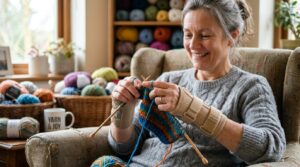
Alt text: Knitter using fingerless gloves to knit in winter without joint pain.
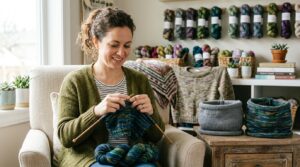
Alt text: Ergonomic circular knitting needles for pain-free winter knitting.
Lifestyle Tips for Long-Term Joint Health
- Stay active year-round with gentle exercise.
- Eat anti-inflammatory foods like fish, nuts, and leafy greens.
- Practice mindfulness or meditation to reduce stress-related tension.
Common Mistakes to Avoid
- Knitting for hours without moving.
- Using heavy, slippery metal needles as a beginner.
- Ignoring early signs of discomfort.
Conclusion
You don’t have to give up knitting when winter chills your joints. By choosing the right tools, warming up, and caring for your body, you can knit in winter without joint pain. With these strategies, your knitting sessions will stay cozy, productive, and pain-free—just the way they should be.
FAQ
1. Why does knitting hurt more in winter?
Cold weather stiffens joints and slows circulation, making knitting discomfort more noticeable.
2. What needles are best for joint pain?
Ergonomic or lightweight circular needles reduce strain on hands and wrists.
3. Can I knit with arthritis in winter?
Yes. Use fingerless gloves, warm your hands, and take breaks to stay comfortable.
4. How often should I rest while knitting?
Every 20–30 minutes, pause to stretch and relax your joints.
5. Do compression gloves help knitters?
Yes, they support circulation and reduce strain, especially during cold-weather knitting.