Knitting on the go feels like freedom. A project in your bag turns waiting rooms, flights, and quiet cafés into creative moments. Yet for many knitters, that freedom comes with a price. Aching fingers. Stiff wrists. Sore elbows. Sometimes even sharp pain that lingers long after the needles are packed away.
If this sounds familiar, you are not alone. Travel knitting changes how your body works. Seating is unpredictable. Posture suffers. Breaks get skipped. Over time, small stresses add up. The result is joint discomfort that slowly steals joy from the craft.
The good news is this. You simply need to work with your body instead of against it.
Let’s explore how to keep your joints comfortable, flexible, and pain-free wherever you knit.
Why Knitting on the Go Causes Joint Strain
Travel knitting feels casual, but it places hidden demands on your joints. Unlike home knitting, movement is restricted. Seats are narrow. Armrests are awkward. Your body compensates in subtle ways.
Wrists bend more than usual. Shoulders creep upward. Fingers grip tighter. Meanwhile, your attention stays on stitches, not posture.
Over time, joints absorb this strain. Tendons become irritated. Muscles fatigue. Pain appears gradually, often after the session ends.
Understanding this cause-and-effect relationship is the first step to preventing discomfort.
Prevent Joint Pain Knitting by Improving Posture
Posture sets the foundation for comfort. Poor alignment shifts stress into wrists and hands.
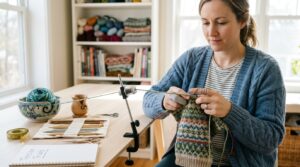
When possible, sit upright with your back supported. Keep shoulders relaxed and down. Elbows should rest close to your sides rather than floating.
Avoid hunching forward. Instead, bring the work closer to your eyes. This small change reduces neck and shoulder tension.
Good posture feels boring. However, it protects joints quietly and effectively.
Choose the Right Project for Travel Knitting
Not every project belongs in your travel bag. Complex patterns demand tension and focus. That tension often transfers into your hands.
To prevent joint pain knitting on the go, choose simple projects. Stockinette socks. Basic scarves. Easy hats.
Simple stitches allow relaxed movement. Your hands flow instead of gripping tightly.
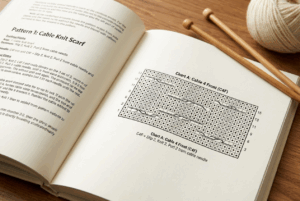
Save intricate lace or cables for home. Travel is for comfort knitting, not endurance challenges.
Lightweight Needles Reduce Hand Fatigue
Needle weight matters more than many knitters realize. Heavy needles increase muscle load, especially during long sessions.
Choose lightweight materials such as bamboo, carbon fiber, or aluminum. These reduce strain without sacrificing control.
Shorter needles may also help in tight spaces. They allow closer hand positioning and less wrist deviation.
Comfort often begins with smarter tools.
Use Flexible Cables for Natural Movement
Stiff cables fight your hands. Flexible ones move with you.
When knitting in confined spaces, flexible cables reduce awkward angles. They allow stitches to rest naturally instead of pulling downward.
This reduces wrist torque and finger tension. Over time, that reduction prevents joint irritation.
Small tool upgrades can create big comfort gains.
Prevent Joint Pain Knitting with Frequent Breaks
Breaks are not optional. They are protective.
While traveling, time feels distorted. It is easy to knit for hours without noticing. Unfortunately, joints notice immediately.
Set gentle reminders. Every 20 to 30 minutes, stop. Stretch fingers. Roll shoulders. Shake out wrists.
Even short breaks reset circulation. They prevent inflammation before it starts.
Think of breaks as maintenance, not interruption.
Stretching Hands and Wrists on the Go
Stretching does not require yoga mats or privacy. Simple movements work anywhere.
Open and close fists slowly. Rotate wrists in gentle circles. Stretch fingers wide, then relax.
These motions increase blood flow and reduce stiffness. They also remind your body to reset tension.
Consistent stretching helps prevent joint pain knitting during extended travel sessions.
Mindful Grip Prevents Overuse Injuries
Many knitters grip needles harder when distracted or stressed. Travel environments amplify this habit.
Pay attention to grip pressure. Ask yourself regularly, “Can I hold this more lightly?”
Relaxed grip reduces strain on finger joints and tendons. It also improves stitch flow.
Light hands knit longer without pain.
Use Supportive Seating Whenever Possible
Seats vary widely while traveling. Some offer support. Others punish posture.
When given a choice, choose chairs with back support. Use pillows or rolled sweaters to support your lower back.
Good support keeps your spine aligned. This alignment reduces compensatory strain in hands and wrists.
Comfort often begins far from the needles.
Prevent Joint Pain Knitting by Managing Yarn Weight
Yarn weight affects tension. Heavier yarn requires more force to manipulate.
For travel knitting, choose lighter weights when possible. Fingering or sport weight yarns reduce resistance.
This choice lowers stress on fingers and wrists. It also allows smoother movement in small spaces.
Heavy yarns can wait until you return home.
Warm Joints Before Knitting Sessions
Cold joints are stiff joints. Travel environments often involve air conditioning or cool cabins.
Warm hands before starting. Rub them together. Hold a warm drink briefly.
Warm muscles move more easily. They resist strain better.
This simple step prepares joints for activity.
Adjust Knitting Speed While Traveling
Speed increases tension. Rushing stitches tightens muscles unconsciously.
While on the go, slow down. Let rhythm replace speed.
Slower knitting encourages relaxed motion. It also improves stitch consistency.
Comfort grows when pace matches environment.
Prevent Joint Pain Knitting with Ergonomic Tools
Ergonomic needles and accessories exist for a reason. They reduce strain through design.
Square or contoured needles improve grip without squeezing. Needle grippers add stability.
While not necessary for everyone, they help knitters prone to pain.
Ergonomics support longevity in the craft.
Stay Hydrated to Support Joint Health
Dehydration affects joints. It reduces lubrication and increases stiffness.
Travel often disrupts hydration habits. Make water accessible.
Proper hydration supports connective tissue health. It also reduces inflammation risk.
Joint comfort depends on whole-body care.
Listen to Early Warning Signs
Pain rarely appears suddenly. It whispers first.
Tingling. Tightness. Mild aching. These signals ask for rest.
Ignoring them leads to injury. Responding early prevents escalation.
When discomfort appears, stop knitting. Stretch. Rest. Resume later if comfortable.
Listening protects your future knitting time.
Balance Knitting with Movement
Sitting for long periods affects circulation. Movement restores balance.
Stand when possible. Walk aisles. Stretch legs.
Movement reduces overall stiffness. It indirectly protects hand joints.
Knitting is repetitive. Movement counteracts repetition.
Prevent Joint Pain Knitting by Packing Smart
Travel bags matter. Heavy bags strain shoulders and arms.
Choose lightweight project bags. Avoid overpacking yarn.
Reduced load protects upper body joints before knitting even begins.
Comfort starts before stitches form.
Mental Relaxation Reduces Physical Tension
Stress tightens muscles. Travel can be stressful.
Practice mindful breathing while knitting. Slow breaths relax the nervous system.
Relaxed minds produce relaxed hands.
Pain prevention is both physical and mental.
When to Stop and Rest Completely
Sometimes prevention means stopping entirely.
If pain persists despite adjustments, rest fully. Continuing through pain risks long-term injury.
Short breaks now protect years of knitting ahead.
Your body deserves respect.
Conclusion
Learning how to prevent joint pain knitting on the go transforms travel knitting into a sustainable pleasure. By choosing comfortable projects, improving posture, using lightweight tools, and listening to your body, you protect your joints without sacrificing creativity. Knitting should feel like companionship on the journey, not a burden. With mindful habits and gentle care, you can enjoy every stitch wherever life takes you.
FAQ
- Can I prevent joint pain knitting while traveling long distances?
Yes. Frequent breaks, posture awareness, and lightweight tools make long sessions manageable. - Are circular needles better for preventing joint pain?
Often yes. They distribute weight more evenly and reduce wrist strain. - How often should I take breaks while knitting on the go?
Every 20 to 30 minutes is ideal for joint protection. - Does yarn type affect joint pain?
Yes. Lighter yarns require less force and reduce strain. - Should I stop knitting if I feel mild pain?
Yes. Early rest prevents more serious joint issues later.