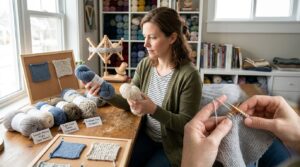
Ergonomic posture for knitting is not about perfection. It is about longevity. Knitting and crocheting should feel calming, not punishing. Yet many crafters push through aching shoulders, sore wrists, and stiff necks without realizing the real issue. Most of the time, the problem is posture.
Crafting invites stillness. You settle in. You focus. Minutes turn into hours. Meanwhile, your body holds the same position, often an awkward one. Over time, small stresses add up. Muscles tighten. Joints complain. Pain becomes familiar.
The good news is this. Pain is not a requirement of creativity. With better posture, smarter support, and regular movement, knitting and crocheting can stay enjoyable and comfortable.
Think of your body as part of your toolkit. When it is supported properly, everything else works better. Let’s explore how to maintain an ergonomic posture for knitting and crocheting so your craft supports your life, not the other way around.
Why Ergonomic Posture for Knitting Matters
Knitting and crocheting involve repetitive motions. Hands move constantly. Arms stay lifted. Eyes focus closely. Without proper posture, strain travels upward through wrists, elbows, shoulders, and neck.
Poor posture compresses joints and restricts circulation. Over time, this leads to inflammation and discomfort. Many crafters mistake this pain as unavoidable. It is not.
Ergonomic posture for knitting distributes effort evenly. It allows muscles to relax instead of brace. As a result, fatigue decreases and endurance increases.
Comfort supports consistency. Consistency supports skill. Everything improves when posture improves.
Understanding Neutral Body Alignment
Ergonomics begins with neutral alignment. This means positioning your body so joints sit naturally, without extreme bending or tension.
Your spine should maintain its natural curves. Shoulders should rest down and back. Wrists should stay straight, not bent upward or downward.
Neutral posture reduces strain because muscles work less to hold position. Instead of fighting gravity, your body cooperates with it.
When alignment feels balanced, crafting feels lighter.
Choosing the Right Seat for Ergonomic Support
Your chair matters more than you think. Soft couches feel cozy but often collapse posture. Unsupported seating encourages slouching.
Choose a chair that supports your lower back. Feet should rest flat on the floor. Knees should sit level with or slightly below hips.
If needed, add a small pillow or rolled towel behind your lower back. This simple support restores spinal alignment.
A supportive seat creates a stable foundation for ergonomic posture for knitting.
Positioning Your Back and Shoulders Correctly
Many crafters hunch forward unconsciously. This strains neck and shoulders quickly.
Sit tall, but not stiff. Imagine a string gently lifting the top of your head. Let shoulders drop away from ears.
Keep your back against the chair when possible. Avoid leaning forward toward your work. Instead, bring the work closer to you.
Relaxed shoulders protect your upper body from chronic tension.
Arm and Elbow Placement for Knitting and Crocheting
Arms should feel supported, not suspended. When elbows float without support, shoulder muscles work overtime.
Rest elbows lightly against your sides or on armrests. This reduces shoulder strain significantly.
Hands should work in front of your torso, not far away. Keeping movements close to the body conserves energy.
Proper arm placement reinforces ergonomic posture for knitting and crocheting naturally.
Wrist Alignment and Hand Position
Wrists often take the blame for crafting pain. However, posture often causes wrist issues indirectly.
Keep wrists as straight as possible. Avoid bending them upward or downward for long periods.
Let fingers do the work. Hands should move freely without excessive gripping.
Straight wrists protect tendons and reduce the risk of repetitive strain injuries.
Supporting Your Hands and Forearms
Support reduces effort. Even small adjustments help.
Use pillows or lap cushions to raise your work. This reduces arm lifting and wrist bending.
Some crafters use lap desks or arm supports. These tools create stability and reduce fatigue.
When hands feel supported, posture improves automatically.
Ergonomic Posture for Knitting While Looking Down
Neck pain often comes from looking down for extended periods. Gravity adds strain quickly.
Instead of bending your neck, raise your work. Bring stitches closer to eye level.
Use pillows, arm supports, or adjustable tables to lift your project.
Keeping your head balanced protects your neck and upper spine.
Lighting and Posture Connection
Poor lighting forces awkward posture. You lean forward to see better.
Ensure your workspace is well-lit. Use task lighting aimed directly at your hands.
Good lighting allows upright posture without strain.
Visibility and posture work together.
Managing Tension in Hands and Grip
Stress shows up in grip. Tight hands lead to sore fingers and wrists.
Check your grip regularly. Ask yourself if you can loosen it slightly.
Relaxed hands knit and crochet more smoothly. Tension rarely improves results.
Soft grip supports ergonomic posture for knitting by reducing overall strain.
Breathing and Body Awareness
Breathing affects posture more than expected. Shallow breathing tightens the upper body.
Take slow, deep breaths occasionally. Let shoulders drop as you exhale.
Breath awareness resets tension and improves alignment.
Relaxation supports endurance.
Importance of Regular Movement Breaks
No posture remains perfect forever. Movement is essential.
Every 20 to 30 minutes, pause. Stretch fingers. Roll shoulders. Stand up.
Movement restores circulation and resets muscles.
Breaks are not interruptions. They are maintenance.
Simple Stretches That Support Ergonomic Crafting
Gentle stretches prevent stiffness. Open and close hands slowly. Rotate wrists.
Stretch arms overhead. Gently tilt your head side to side.
These movements counteract repetitive motion.
Consistent stretching supports pain-free crafting.
Adjusting Ergonomic Posture for Different Craft Styles
Knitting and crocheting involve slightly different motions. Crochet often uses larger arm movements.
Adjust elbow support accordingly. Ensure wrists remain neutral.
Experiment with positions until movements feel effortless.
Customization matters.
Ergonomic Posture for Knitting on the Couch
Couch knitting requires extra attention. Cushions encourage slouching.
Add lumbar support. Sit closer to the edge instead of sinking back.
Use pillows to raise your project.
Comfort and structure must work together.
Ergonomic Posture for Knitting at a Table
Tables offer stability but can force leaning.
Adjust chair height so arms rest comfortably. Use a cushion if needed.
Bring work closer instead of leaning forward.
Tables work well when properly adjusted.
Posture Adjustments for Long Crafting Sessions
Long sessions magnify small issues. Awareness matters more over time.
Check posture periodically. Reset alignment gently.
Small corrections prevent cumulative strain.
Consistency protects your body.
Recognizing Early Warning Signs of Poor Posture
Pain rarely appears suddenly. Early signs include stiffness, tingling, or dull aches.
Listen to these signals. Adjust posture or take a break.
Ignoring early signs leads to injury.
Awareness prevents escalation.
Using Tools to Support Ergonomic Posture
Tools can help. Support pillows, lap desks, and armrests improve alignment.
Choose tools that feel natural, not restrictive.
The goal is support, not immobilization.
Tools should adapt to you.
Balancing Comfort and Focus
Too much focus leads to forgetting posture. Too much adjustment breaks flow.
Find a rhythm. Check posture briefly, then return attention to crafting.
Balance supports enjoyment.
Comfort and creativity can coexist.
Ergonomic Posture for Knitting as You Age
Bodies change. Flexibility decreases. Recovery slows.
Good posture becomes even more important over time.
Use more support. Take more breaks.
Adaptation preserves crafting joy.
Creating a Personal Ergonomic Knitting Setup
No two bodies are the same. Customize your setup.
Experiment with seating, lighting, and supports.
Notice what feels easiest.
Your body provides feedback if you listen.
Why Ergonomic Posture Supports Long-Term Creativity
Pain discourages practice. Comfort encourages exploration.
When your body feels good, you knit longer and learn more.
Ergonomic posture for knitting protects your future creativity.
Sustainable habits matter.
Conclusion
Maintaining ergonomic posture for knitting and crocheting is an investment in your body and your craft. By supporting your spine, relaxing your shoulders, aligning your wrists, and moving regularly, you prevent pain before it starts. Small adjustments create big relief. With mindful posture and gentle care, knitting and crocheting remain sources of comfort instead of strain. Your creativity deserves a body that feels supported, relaxed, and ready for every stitch.
FAQ
- What is ergonomic posture for knitting?
It is a body position that supports joints, reduces strain, and allows relaxed movement while crafting. - How often should I take breaks while knitting?
Every 20 to 30 minutes is ideal to prevent stiffness and fatigue. - Can poor posture really cause knitting pain?
Yes. Poor posture increases strain on wrists, shoulders, and neck over time. - Do I need special furniture for ergonomic knitting?
No. Simple adjustments and added support often make a big difference. - Is ergonomic posture important for crocheting too?
Absolutely. Crocheting involves repetitive motion and benefits equally from good posture.