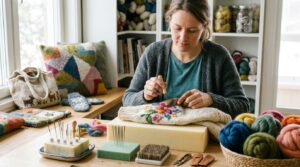
Adding embellishments to knitted projects can transform simple pieces into artistic creations. Many knitters discover creative freedom when using felting needles for knitting to decorate garments, accessories, and home décor.
Needle felting allows crafters to attach wool fibers directly onto knitted fabric. As a result, knitters can add shapes, textures, or colorful designs without complex stitching. This technique works especially well for sweaters, hats, scarves, and decorative panels.
However, choosing the right tools matters. Felting needles come in different shapes, sizes, and gauges. Therefore, understanding these variations helps knitters achieve cleaner and more professional results.
With the correct tools and techniques, embellishing knitted items becomes both relaxing and rewarding.
Understanding Felting and Knitting Embellishments
Felting is a technique that bonds wool fibers together through friction. Special needles contain tiny barbs that tangle fibers when pushed repeatedly into the fabric.
When using felting needles for knitting, these barbs pull loose wool into the knit stitches. Consequently, the fibers lock together and create a permanent decoration.
Unlike sewing appliqués, needle felting blends fibers directly into the fabric. Because of this, the finished embellishment feels soft and integrated rather than attached.
Additionally, knitters can shape fibers gradually. This flexibility allows artists to build layers and create subtle shading.
Common embellishments include flowers, animals, geometric designs, and textured patterns. Many knitters also use this technique to repair small holes or reinforce worn areas.
For creative knitters, this method offers nearly unlimited design possibilities.
Types of Felting Needles
Understanding needle types helps knitters select the best tools for each project. Although all felting needles perform the same basic function, they differ in structure.
When choosing felting needles for knitting, these variations affect both speed and detail.
Triangle Needles
Triangle needles are the most common type. Their triangular shaft contains barbs along each edge.
These needles work well for beginners. They also provide balanced felting action across the surface.
Because of their versatility, triangle needles suit most knitting embellishment projects.
Star Needles
Star needles have four edges instead of three. This design increases the number of barbs.
As a result, felting happens faster. Star needles work well when attaching large fiber sections to knitted surfaces.
However, they may create rough textures if used for fine details.
Spiral Needles
Spiral needles twist slightly along the shaft. This design spreads barbs around the needle.
Therefore, fibers felt more evenly with each poke. Spiral needles help reduce visible holes in delicate knitting.
Many experienced crafters prefer spiral needles for finishing touches.
Reverse Needles
Reverse needles pull fibers outward instead of pushing them inward.
This effect creates fluffy textures on the surface of knitted fabric. Consequently, reverse needles work well for fur, hair, or soft decorative accents.
Selecting the correct needle type improves both control and efficiency.
Felting Needle Sizes and Gauges
Needle size determines how aggressively fibers felt together. Therefore, gauge selection plays a major role in project success.
When working with felting needles for knitting, using the right size protects the knitted fabric while still securing fibers.
Coarse Needles
Coarse needles typically range from gauge 32 to 34.
These needles contain larger barbs. As a result, they move fibers quickly and attach wool rapidly.
However, they can leave visible holes if used too aggressively.
For this reason, coarse needles work best during the early stages of felting.
Medium Needles
Medium needles usually fall between gauge 36 and 38.
These sizes offer a balance between speed and control. Many knitters use medium needles for shaping designs and securing edges.
Because of their versatility, medium gauges remain the most popular choice.
Fine Needles
Fine needles range from gauge 40 and higher.
These needles contain smaller barbs. Consequently, they create smoother finishes and minimize fabric damage.
Fine needles work best for delicate detailing and final adjustments.
Choosing the proper gauge ensures that felting needles for knitting enhance rather than damage the project.
Matching Needles to Yarn and Fabric
Every knitting project uses different yarn weights and fiber types. Therefore, selecting the correct needle requires careful consideration.
Thicker yarns tolerate stronger needles. Bulky knitted fabrics can handle coarse gauges without damage.
In contrast, lightweight knitting requires more delicate tools.
When using felting needles for knitting, always test the needle on a small sample first. This step helps identify potential issues before working on the main project.
Fiber content also matters. Wool felts easily because its fibers contain natural scales.
Synthetic yarns rarely felt successfully. Therefore, embellishments usually require additional wool roving.
Combining the correct yarn and needle size produces cleaner and more durable designs.
Essential Tools for Needle Felting on Knitting
Although needles remain the primary tool, several accessories improve safety and efficiency.
Using felting needles for knitting becomes much easier with the proper setup.
Felting Foam or Brush Mat
A foam pad protects the needle tip and prevents breakage.
Additionally, it keeps the knitted fabric stable during the felting process.
Brush mats offer another option. Their stiff bristles support the fabric while allowing needles to pass through safely.
Finger Guards
Felting needles are extremely sharp. Finger guards protect hands while working close to the fabric surface.
These simple tools reduce the risk of accidental pokes.
Multi-Needle Holders
Some tools hold several needles at once. These holders speed up felting large areas.
However, they work best for background textures rather than small details.
Wool Roving
Loose wool fibers form the base of most embellishments.
Choose high-quality roving for smoother results. Natural fibers felt more easily and blend well with knitted fabrics.
With these tools, knitters can safely explore decorative felting techniques.
Techniques for Beautiful Knitting Embellishments
Successful embellishments require patience and practice. Fortunately, several techniques improve results quickly.
When using felting needles for knitting, follow these methods to achieve consistent designs.
Start With Light Pressure
Begin gently. Strong pressure can damage delicate knit stitches.
Gradually increase pressure as fibers begin locking together.
Work From the Outside In
Felting from the edges inward helps maintain shape. This approach prevents designs from spreading unevenly.
Layer Fibers Gradually
Add wool in thin layers rather than thick bundles. Layering allows greater control over shape and texture.
Rotate the Fabric Often
Turning the project ensures even felting across the design. This practice also reduces visible poke marks.
Finish With Fine Needles
Once the design feels secure, switch to smaller gauges. Fine needles smooth the surface and refine details.
By applying these techniques, knitters gain confidence while working with decorative fibers.
Creative Embellishment Ideas for Knitted Projects
Once knitters understand how felting needles for knitting work, creative possibilities expand dramatically.
Simple garments become unique artistic pieces.
Many knitters decorate sweaters with small flowers or leaves. These designs add subtle texture and color.
Animal motifs also appear popular on children’s clothing. Needle-felted animals create playful and charming designs.
Scarves and shawls benefit from decorative borders. Felted patterns along edges provide visual interest without extra knitting complexity.
Additionally, knitters often embellish hats with three-dimensional flowers or geometric patterns.
Home décor projects offer another opportunity for creativity. Felted motifs on pillow covers or blankets create personalized designs.
Because felting works directly on finished knitting, designers can experiment freely without altering the original pattern.
Avoiding Common Felting Mistakes
Although the technique appears simple, beginners sometimes encounter problems.
When using felting needles for knitting, awareness of common mistakes prevents frustration.
Over-Felting the Fabric
Too much needle action compresses fibers excessively. This process may distort the knitted structure.
Therefore, stop periodically and examine the fabric.
Using the Wrong Fiber
Not all wool behaves the same way. Superwash wool resists felting because it undergoes chemical treatment.
Instead, choose untreated wool roving for best results.
Working Without a Support Surface
Felting directly on a hard table can break needles quickly. Always use foam or a brush mat beneath the fabric.
Rushing the Process
Needle felting requires patience. Quick stabbing motions often create uneven textures.
Slow, consistent movements produce cleaner results.
By avoiding these mistakes, knitters enjoy smoother embellishment experiences.
Conclusion
Decorative felting opens exciting possibilities for knitters who want to personalize their projects. With the right tools and techniques, embellishments become both accessible and enjoyable.
Understanding how felting needles for knitting differ in shape, size, and gauge helps crafters choose the best option for each design. Selecting appropriate needles protects delicate knit stitches while allowing fibers to bond securely.
Additionally, practicing simple techniques builds confidence quickly. Light pressure, layered fibers, and careful shaping produce professional results.
Creative knitters often discover that felting transforms ordinary garments into unique works of art. Whether adding flowers to sweaters or textures to scarves, embellishments enhance both beauty and individuality.
Most importantly, experimentation leads to improvement. As knitters practice and explore new ideas, their decorative skills continue growing.
With patience and the right tools, felting becomes a valuable technique in every knitter’s creative toolkit.
FAQ
1. What types of needles work best for adding wool designs to knitted fabric?
Medium-gauge triangle needles often provide the best balance between control and speed. However, fine needles work better for detailed finishing.
2. Can beginners use needle felting on knitted garments?
Yes. Beginners can start with simple shapes and small designs. Practicing on scrap fabric helps build confidence.
3. Does all yarn felt well for embellishment work?
No. Superwash and synthetic yarns rarely felt successfully. Untreated wool fibers bond much more easily.
4. How can knitters avoid damaging knitted fabric while felting?
Use gentle pressure, select finer needles for delicate yarn, and always test techniques on a sample swatch first.
5. What projects benefit most from decorative wool felting?
Sweaters, hats, scarves, and pillow covers often look beautiful with needle-felted accents or textured designs.