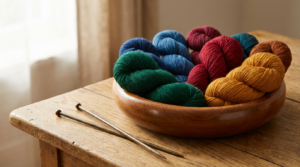
If you’re ready to learn lace knitting techniques, you’ve come to the right place. Lace knitting, with its exquisite openwork patterns, adds a touch of ethereal beauty to any project. While it might appear intricate and challenging, with the right guidance and a bit of practice, mastering this elegant craft is entirely achievable. At Knit n Style, we believe every knitter can create stunning lace pieces, and this guide is designed to walk you through the fundamentals, demystifying the process one stitch at a time.
The Magic of Lace: Understanding the Basics
Lace knitting relies on a simple yet powerful combination of yarn overs (YO) and decreases. Yarn overs create the holes that give lace its distinctive open texture, while decreases (like knit two together, K2tog, or slip, slip, knit, SSK) shape the fabric and balance the stitch count. The interplay between these two elements is what forms those beautiful, intricate designs. Consequently, understanding this balance is key to successful lace projects.
Essential Stitches for Lace Knitting
Before you embark on your first lace project, let’s review the fundamental stitches you’ll be using:
- Knit (K) and Purl (P): These are the foundation of all knitting.
- Yarn Over (YO): Bring the yarn to the front between the needles (if knitting) or to the back (if purling) to create a new stitch and a hole. This effectively increases your stitch count by one.
- Knit Two Together (K2tog): This is a right-leaning decrease where you knit two stitches together as one. This balances a YO.
- Slip, Slip, Knit (SSK): This is a left-leaning decrease. Slip two stitches knitwise, then knit them together through the back loops. This also balances a YO.
- Purl Two Together (P2tog): This is a right-leaning purl decrease.
- Slip, Slip, Purl (SSP): This is a left-leaning purl decrease.
Understanding these basic building blocks is crucial for anyone looking to master openwork knitting. Practice each one until it feels natural. You’ll build a strong foundation for more complex patterns.
Reading Lace Charts and Written Instructions
Most lace patterns are presented either in written form or as charts. Many knitters find charts incredibly intuitive once they understand the symbols. Each symbol represents a stitch or action. You read the chart from right to left on knit rows and left to right on purl rows (for flat knitting). Written instructions, on the other hand, detail each step in text. Therefore, choosing your preferred method is important.
Do not be intimidated by a chart! Take your time to study the legend and understand what each symbol means. Often, you’ll find repeat sections highlighted, making it easier to follow the pattern across your row. If you’re struggling, try highlighting the row you’re on with a removable marker or a magnetic board. Similarly, reading crochet charts also involves understanding symbols, which you can learn more about by visiting our guide on reading crochet charts.
Preparing for Your First Lace Project
Successful lace projects often begin with careful preparation. First, consider your yarn choice. Finer yarns (fingering, lace weight) with good stitch definition often show lace patterns beautifully. Moreover, the fiber content matters. Wool, for instance, has excellent elasticity and memory, which helps lace hold its shape after blocking. Cotton and linen offer a different drape, often more fluid and less structured. To learn more about selecting the right materials, explore our fiber guide for choosing yarn.
Choosing the Right Needles
Needle selection is also vital. Generally, you’ll use needles that are slightly larger than what you might use for plain stockinette stitch with the same yarn. This creates a more open, airy fabric, which is characteristic of lace. For intricate patterns or larger projects, interchangeable knitting needles can be very beneficial. They allow you to easily change cable lengths and needle tips. You can find excellent advice on choosing the best interchangeable knitting needles on our site.
Gauge Swatch: Your Best Friend
Never skip the gauge swatch, especially with lace! Lace patterns can be significantly affected by your tension. A swatch helps you confirm your needle size and ensures your finished project will be the correct dimensions. Furthermore, it gives you an opportunity to practice the lace pattern repeat. This helps you become familiar with the sequence before committing to the full project.
Mastering Basic Lace Stitches and Techniques
Once you understand the foundational stitches, you can start combining them to create simple lace patterns. Let’s explore some common combinations and tips for success.
Yarn Overs and Decreases: The Dynamic Duo
The magic of lace truly comes alive when you pair yarn overs with decreases. Remember, a yarn over increases your stitch count, so it almost always needs to be balanced by a decrease on the same or a subsequent row to maintain the fabric’s width. For example, a K2tog or SSK will often follow a YO. This balance is fundamental to forming the openwork designs. Consequently, practicing these pairs is essential to successfully knit lace.
Working with Edges and Selvedges
The edges of your lace fabric can be just as important as the pattern itself. Often, patterns will include specific instructions for selvedge stitches (edge stitches) to create a neat finish. These might be slipped stitches or simple knit stitches. A clean edge makes blocking easier and gives your finished piece a professional look. Similarly, careful attention to detail elevates all crafting projects.
Common Lace Knitting Patterns for Beginners
To really learn lace knitting techniques, starting with simpler patterns is highly recommended. Here are a few popular and relatively easy lace patterns that are great for beginners:
- Garter Lace: This uses yarn overs and decreases within a garter stitch background, creating a textured, reversible fabric.
- Eyelet Lace: Simple rows of yarn overs and decreases, often separated by plain knit rows, create small, uniform holes. This is a fantastic way to practice the basic movements.
- Faggoting: This pattern creates a delicate, ladder-like effect using alternating yarn overs and decreases.
- Old Shale (Feather and Fan): A classic and beloved lace pattern that creates a wavy, shell-like texture. While it looks complex, it’s often a four-row repeat that is quite straightforward once you get the hang of it.
Start with a small swatch of one of these patterns. Focus on consistency and accuracy with your YOs and decreases. Patience is key when you knit delicate patterns.
Troubleshooting Common Lace Knitting Issues
Even experienced knitters encounter challenges. Here are some common issues and how to address them:
Dropped Stitches and Unintended Holes
A dropped stitch in lace can be tricky because of the yarn overs. If you notice an extra large hole or a missing stitch, carefully examine your work. Often, a dropped stitch can be picked up with a crochet hook. If you accidentally made an extra YO, you might be able to simply drop it off the needle on the next row, or knit it together with an adjacent stitch if it fits the pattern. However, sometimes you may need to unravel back to the mistake.
Incorrect Stitch Count
Your stitch count should remain consistent across rows, unless the pattern specifically states otherwise. If your stitch count is off, it usually means you’ve either forgotten a YO or a decrease, or you’ve accidentally made an extra one. Count your stitches frequently, especially after completing a repeat section, to catch errors early. This proactive approach saves time and frustration.
Tension Problems
Inconsistent tension can make your lace look uneven. Practice helps to develop a more even tension. Also, ensure your yarn flows smoothly as you knit. If your hands feel tired, take a break. Maintaining consistent tension is a fundamental aspect of creating beautiful fabric, regardless of the pattern. Furthermore, consider how ergonomic crochet hooks can improve comfort and tension in crochet, a principle that applies to knitting needles as well.
Blocking: The Secret to Beautiful Lace
Blocking is not optional for lace knitting; it is absolutely essential. Blocking is the process of wetting your finished piece and then stretching and pinning it to its desired dimensions while it dries. This process opens up the lace pattern, evens out stitches, and gives the fabric its true drape and appearance. Without blocking, lace often looks crumpled and indistinct. To truly master openwork knitting, embracing blocking is crucial.
How to Block Lace
- Wet Your Project: Gently immerse your lace piece in lukewarm water with a bit of wool wash (if using wool) for at least 20-30 minutes. Ensure it’s fully saturated.
- Remove Excess Water: Gently squeeze out water, being careful not to wring or twist the fabric. Roll it in a clean towel and press to absorb more water.
- Pin to Shape: Lay your damp project on blocking mats. Carefully stretch and pin the fabric to the desired measurements, ensuring all points and edges are even. Use rust-proof pins.
- Let it Dry: Allow the piece to dry completely, which can take 24-48 hours depending on yarn and humidity.
- Unpin: Once dry, carefully unpin your beautiful lace creation.
Blocking truly transforms lace from a somewhat rumpled piece of knitting into a stunning, elegant fabric. It’s a satisfying final step that showcases all your hard work. For more advanced techniques and tools that can assist with complex projects, you might explore essential advanced crafting tools.
Designing Your Own Lace Projects
Once you feel confident with basic lace patterns, you might be inspired to design your own. This involves understanding how different stitch combinations create specific effects. You can start by modifying existing patterns or combining elements from several. Experiment with different yarn weights and needle sizes to see how they impact the openness and drape of the lace. Designing your own patterns is a rewarding journey. It allows you to express your creativity fully. To learn more about selecting patterns for your projects, refer to our guide on how to choose knitting and crochet patterns.
Resources for Lace Knitters
There are many excellent resources available for those who want to learn lace knitting techniques. Online communities, knitting books, and video tutorials can provide inspiration and guidance. Websites like Ravelry are fantastic for finding patterns and connecting with other knitters. Moreover, many yarn companies offer free lace patterns on their sites. For example, explore the vast resources at Ravelry for patterns and community support. Also, for detailed stitch instructions and tutorials, KnittingHelp.com is an excellent resource.
Embracing the Journey of Lace Knitting
Learning how to knit lace is a journey of patience, practice, and immense satisfaction. Each delicate stitch contributes to a beautiful, intricate design. Don’t be discouraged by mistakes; they are part of the learning process. Instead, view them as opportunities to refine your skills and deepen your understanding of the craft. With each successful project, your confidence will grow, and you’ll soon be creating stunning lace pieces that are truly works of art. We hope this guide helps you confidently learn lace knitting techniques. Remember that knitting, like other crafts, can also be a wonderful way to improve knitting for mental wellness.
Conclusion
Ultimately, to learn lace knitting techniques is to open up a world of elegant and intricate designs. From understanding the core stitches like yarn overs and decreases, to mastering the art of reading charts, and finally, to the transformative power of blocking, every step brings you closer to creating breathtaking textile art. We encourage you to start with simple patterns, practice consistently, and embrace the beauty of this delicate craft. Happy knitting!
FAQ
What is the most important stitch to know for lace?
The yarn over (YO) is arguably the most crucial stitch for lace knitting. It creates the distinctive openwork holes that define lace fabric. Paired with decreases like K2tog or SSK, it forms the basis of nearly all lace patterns.
How do I fix a mistake in my lace knitting?
Fixing mistakes in lace can be challenging. For simple errors like a dropped stitch, a crochet hook can often retrieve it. For more complex issues, it’s often best to carefully unravel back to the mistake. Using lifelines every few rows can save a lot of frustration, as they allow you to unravel without losing all your progress.
Is lace knitting difficult for beginners?
Lace knitting can seem intimidating, but it is not inherently difficult. It requires attention to detail and consistent counting, but the basic techniques are straightforward. Starting with simple patterns and practicing the fundamental stitches will make it very accessible for beginners.
Why is blocking so important for knitted lace?
Blocking is essential for knitted lace because it dramatically opens up the pattern, evens out the stitches, and allows the fabric to achieve its intended drape and appearance. Without blocking, lace often looks scrunched and the pattern details are not clearly visible.
What type of yarn is best for lace designs?
Finer yarns, such as lace weight, fingering, or light sport weight, are generally best for lace designs. Yarns with good stitch definition, often those with a bit of wool content for elasticity, will showcase the intricate patterns most effectively. Smooth yarns tend to highlight the openwork better than highly textured ones.