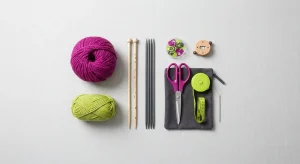
Going beyond just needles, having the right essential knitting tools can significantly enhance your crafting experience and the quality of your finished items. While a good set of needles is fundamental, a few key accessories can streamline your process, improve your yarn management, and give your projects a professional, polished look. At Knit n Style, we’re here to guide you through the invaluable tools that will elevate your knitting from good to truly great.
Setting Up Your Knitting Toolkit
Think of your knitting toolkit as your personal workshop. The better organized and equipped it is, the more enjoyable and efficient your crafting will be. Here are some indispensable tools that every knitter, regardless of skill level, should consider adding to their collection.
Yarn Management Made Easy
Dealing with tangled yarn can be frustrating. Thankfully, these specific tools are designed to keep your yarn neat and accessible, making your knitting process much smoother.
- Yarn Swift: If you often buy yarn in hanks (large loops that need to be wound into balls), a yarn swift is a true lifesaver. It holds the hank open and rotates smoothly as you wind, preventing tangles and making the process much faster and easier. There are umbrella swifts and tabletop swifts, both serving the same purpose.
- Ball Winder: Paired with a swift, a ball winder transforms hanks into neat, center-pull cakes. These cakes sit stably and unwind from the center, preventing your yarn from rolling around and getting tangled. They also save space compared to hand-wound balls.
- Yarn Bowl: For those working directly from a ball or cake, a yarn bowl is a simple yet effective tool. It’s a bowl, often ceramic or wood, with a spiral cut-out that guides your working yarn, keeping it contained and preventing it from rolling away or getting dirty.
Achieving Professional Finishes
The way you finish your project can make all the difference. Moreover, these tools help ensure your hard work looks its best, presenting a professional appearance.
- Blocking Mats and Pins: Blocking is the secret to professional-looking knitwear. Blocking mats are interlocking foam squares that provide a flat, pin-able surface. T-pins (rust-proof pins with a flat top) are essential for stretching and shaping your finished piece to its desired dimensions. This process evens out stitches, opens up lace, and corrects minor tension inconsistencies.
- Measuring Tape/Gauge Ruler: Accurate measurements are crucial for ensuring your garments fit. A flexible measuring tape is a must-have. A gauge ruler (often a small square with cut-outs) helps you quickly check your stitch and row gauge, ensuring your project matches the pattern’s intended size.
- Darning/Tapestry Needles: These blunt-tipped needles are used for weaving in ends and seaming pieces together. They come in various sizes and are essential for a clean, invisible finish. Look for metal or plastic ones with large eyes to accommodate yarn.
Everyday Knitting Accessories for Convenience
Beyond the core items, several smaller yet equally important accessories contribute to a more enjoyable and efficient knitting experience. These small additions can prevent common frustrations and keep your project on track.
Stitch Markers and Holders
Keeping track of your stitches and rows is fundamental for successful knitting. Consequently, stitch markers and holders are invaluable aids.
- Stitch Markers: These come in various forms, from simple rings to locking clasps. They are used to mark specific stitches, indicate pattern repeats, or denote the beginning of a round. Locking markers are particularly useful if you need to move them freely or use them to hold dropped stitches temporarily.
- Stitch Holders: When you need to set aside a section of stitches (like for a sleeve or neckline) while working on another part of your project, stitch holders are indispensable. They keep your live stitches secure and prevent them from unraveling.
Scissors and Snips
A good pair of sharp scissors is surprisingly important. You will frequently need to cut yarn tails, trim ends, or open new skeins. Small, sharp snips are often preferred for their portability and precision, especially when working on the go. Many knitters keep a dedicated pair with their project bag to avoid dulling them on other materials.
Row Counters
For patterns with complex repeats or specific row counts, a row counter is a simple yet effective tool. These small devices, either manual or digital, help you keep an accurate tally of your rows, preventing errors and the need to constantly recount. This can be particularly helpful for intricate lace or cable patterns.
Specialized Tools for Advanced Techniques
As you grow in your knitting journey, you might explore more complex projects. Fortunately, certain specialized crafting tools become highly beneficial for these endeavors. For instance, consider exploring our guide on essential advanced crafting tools for more insights.
Cable Needles
If you love the intricate texture of cable knitting, a cable needle is an absolute must-have. These short, often bent needles hold a small number of stitches temporarily while you knit other stitches out of order, creating the signature crossing pattern of cables. They come in various materials and sizes to match your project’s yarn weight.
Point Protectors and Stoppers
When you’re not actively knitting, point protectors slide onto the tips of your needles to prevent stitches from slipping off. Stoppers, on the other hand, are placed at the ends of straight needles to keep your work secure. Both help protect your valuable projects from accidental unraveling, especially when stored or transported.
Swatch Rulers and Cards
Achieving the correct gauge is paramount for a successful project, especially for garments. A swatching ruler or card helps you accurately measure your stitch and row gauge from a swatch. This small but mighty tool ensures your finished item will match the pattern’s dimensions, saving you potential frustration later on. Learn more about how to choose knitting and crochet patterns that align with your gauge swatching efforts.
Organizing Your Knitting Tools and Supplies
Once you’ve gathered your collection of essential knitting tools, keeping them organized is key to an enjoyable crafting experience. A well-organized toolkit means less time searching and more time knitting. Consider a dedicated project bag with multiple compartments, or small pouches for different categories of tools. This practice ensures everything is at your fingertips when inspiration strikes.
Project Bags and Cases
A good project bag is more than just a place to store your yarn; it’s a mobile crafting station. Look for bags with internal pockets for needles, notions, and patterns. Additionally, dedicated needle cases keep your knitting needles sorted by size and type, preventing them from getting lost or damaged. This organization is crucial for maintaining your knitting supplies.
Notion Pouches
Small notions like stitch markers, darning needles, and row counters can easily disappear. Therefore, a small notion pouch or a dedicated compartment within your project bag is ideal for keeping these tiny but mighty tools contained and accessible. This prevents frustration and ensures you always have what you need.
Maintaining Your Knitting Tools
Just like any other craft, proper care and maintenance will extend the life of your essential knitting tools. For example, regularly check your needles for snags or rough spots that could damage your yarn. Clean your blocking mats as needed, and keep your scissors sharp. By taking a few moments to care for your tools, you ensure they remain in excellent working condition for countless projects to come.
For further reading on the importance of tools in crafting, you might find this article on Craftsy’s essential knitting tools helpful. Also, the Spruce Crafts provides a comprehensive list of knitting accessories that complement your toolkit.
Beyond the Basics: Expanding Your Collection
As your skills grow, so too might your desire for more specialized equipment. Perhaps you’ll explore different types of needles, such as those discussed in our guide on choosing the best interchangeable knitting needles. Or maybe you’ll delve into ergonomic options, similar to ergonomic crochet hooks, to enhance comfort during long crafting sessions. Regardless, the world of knitting offers a vast array of tools to support every creative endeavor.
Embracing these additional tools can truly transform your knitting experience, making it more efficient, enjoyable, and ultimately, more successful. Investing in the right accessories not only improves the quality of your finished projects but also adds to the pleasure of the crafting process itself. Happy knitting!
Frequently Asked Questions About Knitting Accessories
What are the most important knitting supplies for a beginner?
For beginners, the most important knitting supplies are a good set of needles, a few skeins of practice yarn, a pair of scissors, a tapestry needle for weaving in ends, and some stitch markers. These items provide a solid foundation for learning basic techniques and completing your first projects.
How do I choose the right size darning needle?
Choosing the right size darning needle depends on the weight of your yarn. For finer yarns, use a thinner darning needle. For bulky yarns, opt for a thicker one. The eye of the needle should be large enough to thread your yarn easily, and the tip should be blunt to avoid splitting the yarn strands.
Why is blocking important for knitted items?
Blocking is crucial because it helps to even out your stitches, open up lace patterns, and shape your finished item to the correct dimensions. It also relaxes the fibers, improving the drape and overall appearance of your knitwear. This process gives your projects a polished, professional finish.
Are yarn swifts and ball winders necessary for all knitters?
Yarn swifts and ball winders are particularly useful if you frequently purchase yarn in hanks, which need to be wound into balls before use. If you primarily use yarn that comes in pre-wound cakes or balls, these tools might not be strictly necessary, though they can still be convenient for re-winding.
What are some good ways to organize small knitting notions?
Small knitting notions like stitch markers, row counters, and tapestry needles can be organized in small pouches, clear plastic containers with compartments, or even old mint tins. Keeping them in a dedicated spot within your project bag ensures they are always easy to find and don’t get lost.