Stepping into the world of crochet is an exciting adventure, but the sheer variety of hooks, yarns, and accessories can feel overwhelming for a newcomer. Don’t let that deter you! This beginner crochet supplies guide is here to simplify your choices, ensuring you pick exactly what you need to start your first project with confidence and joy. At Knit n Style, we empower you to embark on your crafting journey smoothly.
The crafting market is booming, with a 34% increase in beginner crafters between 2021 and 2025. This surge highlights a growing desire for creative outlets and the satisfaction of making something by hand. Choosing the right starter kit is your first step towards joining this vibrant community. Furthermore, having the correct tools from the start significantly boosts your chances of success and enjoyment.
Essential Crochet Hooks: Finding Your Perfect Match
The crochet hook is your primary tool, and selecting the right one can make a huge difference in your comfort and the success of your project. Consequently, understanding the different types and sizes is crucial for any aspiring crocheter. Many beginners find that a comfortable hook makes learning much easier.
Hook Materials
- Aluminum: Lightweight, smooth, and affordable. These are great for beginners, as yarn glides easily across them.
- Steel: Used for very fine threads, often for lace crochet. Therefore, they are not typically recommended for beginners.
- Plastic/Acrylic: Inexpensive, lightweight, and come in large sizes. However, they can sometimes feel ‘sticky’ with certain yarn types, which might be frustrating for new crafters.
- Bamboo/Wood: These offer more grip than metal, which can be helpful for beginners to prevent stitches from slipping. Additionally, they are warm to the touch and lightweight, providing a pleasant crafting experience.
Hook Sizes
Crochet hooks are sized by letters (US) and millimeters (metric). For beginners, a medium-sized hook is recommended, as it’s easier to handle and see your stitches. Specifically, a US H/8 (5.0mm) or I/9 (5.5mm) hook is a great starting point. These sizes work well with commonly available worsted weight yarns. Moreover, understanding hook sizes is fundamental for following crochet patterns accurately. You can learn more about All You Need to Know About Crochet Hooks in One Place to deepen your understanding.
Pro Tip: Look for hooks with ergonomic handles. These can reduce hand fatigue and make long crafting sessions much more comfortable, a small investment that pays off in enjoyment. In fact, many experienced crocheters swear by them for sustained crafting.
Yarn for Beginners: Making the Right Choice
Choosing the right yarn is crucial for a positive beginner experience. Not all yarns are created equal, and some can be frustrating for new crafters. Therefore, selecting an appropriate yarn is just as important as choosing the right hook. This section of our beginner crochet supplies guide will walk you through the best options.
Recommended Yarn Characteristics
When starting, consider yarn that is easy to work with and forgiving of mistakes. Furthermore, affordability is often a key factor for practice projects. Here are some characteristics to prioritize:
- Fiber Content:
- Acrylic: Very affordable, widely available, durable, and comes in a huge range of colors. It’s easy to work with and washes well, making it an excellent choice for practice.
- Cotton: Excellent for dishcloths, washcloths, and home decor items. It has good stitch definition and is absorbent. Organic cotton is a fantastic sustainable choice, aligning with the 58% demand for eco-friendly materials, according to Statista’s report on sustainable fashion materials.
- Wool Blends: While pure wool can be a bit splurgy for practice, a wool-acrylic blend offers the warmth of wool with the affordability and ease of acrylic. Consequently, these blends can be a good intermediate option.
- Yarn Weight:
- Worsted Weight (Medium/Aran/10-ply): This is the gold standard for beginners. It’s thick enough to easily see your stitches, yet not so bulky that it’s difficult to handle. Most beginner patterns are designed for this weight.
- Bulky (Chunky/12-ply): While thicker, it can be a bit harder to control initially, but projects work up quickly.
- Super Bulky (Super Chunky): Very thick, great for quick satisfaction, but can be cumbersome for very first projects.
For a reliable and beginner-friendly option, consider brands like Red Heart. A Trusted Yarn for More Than 3/4 of a Century – Red Heart offers a wide variety of acrylic yarns perfect for learning. Their consistent quality makes them a favorite among crafters.
Beyond Hooks and Yarn: Other Essential Tools
While hooks and yarn are the stars, a few other accessories will make your crochet journey smoother and more enjoyable. These items are often overlooked in a basic beginner crochet supplies guide, but they are incredibly helpful.
Tapestry Needle (Yarn Needle)
A tapestry needle, also known as a yarn needle, is essential for weaving in yarn ends neatly. Unlike sewing needles, these have blunt tips and large eyes, making them perfect for thicker yarn. Therefore, they are a must-have for finishing any project.
Stitch Markers
These small, often colorful, clips or rings help you keep track of stitches, especially when working in the round or counting rows. They are particularly useful for beginners who are still learning to identify their stitches. In fact, using stitch markers can prevent a lot of frustration.
Scissors
Any sharp pair of scissors will do for cutting yarn. However, a small, sharp pair specifically for crafting is often preferred for precision and convenience. Keep them handy in your project bag.
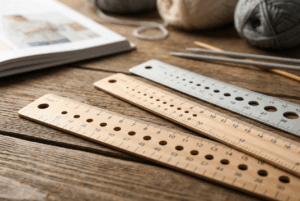
Measuring Tape or Ruler
A measuring tape is vital for checking your gauge (how many stitches and rows you make per inch) and ensuring your project will be the correct size. This is particularly important when following patterns. Moreover, consistently checking your gauge will improve the overall quality of your work.
Row Counter
While not strictly essential, a row counter can be incredibly helpful for keeping track of rows, especially in larger projects. It can be a simple clicker counter or an app on your phone. This tool can prevent errors and save time.
Building Your First Crochet Kit: A Beginner Crochet Supplies Guide Checklist
To help you get started, here’s a concise checklist for your initial crochet kit. This beginner crochet supplies guide aims to make your shopping trip simple and efficient.
- US H/8 (5.0mm) or I/9 (5.5mm) crochet hook (consider an ergonomic handle)
- One skein of light-colored worsted weight acrylic yarn
- Tapestry needle
- A few stitch markers
- Small pair of scissors
- Measuring tape
Remember, you don’t need to buy everything at once. Start with these basics, and you can gradually add more tools as your skills grow and your projects become more complex. Many crafters find joy in slowly building their collection of tools.
Learning Basic Crochet Stitches and Techniques
Once you have your essential tools, the next step is to learn the foundational crochet stitches. These form the building blocks of almost every crochet project. For example, mastering the chain stitch, single crochet, and double crochet will open up a world of possibilities.
Starting with the Basics
The very first stitch you’ll learn is the slip knot, which creates the loop on your hook. Next, you’ll master the chain stitch (ch), which forms the foundation row of most projects. These two are fundamental. Subsequently, you’ll move on to basic stitches like:
- Single Crochet (sc): A compact and sturdy stitch, great for creating dense fabrics.
- Half Double Crochet (hdc): Taller than a single crochet, offering a bit more drape.
- Double Crochet (dc): A taller, looser stitch that works up quickly and creates a more open fabric.
Practicing these stitches repeatedly will build your muscle memory and confidence. There are many excellent video tutorials available online that can visually guide you through each step. Furthermore, checking out A Quick Guide to Crochet Stitches and Techniques can provide further detailed instructions.
First Project Ideas for Beginners
With your new supplies and a grasp of basic stitches, you’re ready for your first project! Choosing a simple project will help you apply what you’ve learned without getting overwhelmed. Consequently, you’ll gain confidence with each completed item.
Simple Project Suggestions
- Dishcloths or Washcloths: These are perfect for practicing basic stitches like single or double crochet. They don’t require much shaping, and any imperfections can be charming. Moreover, they are useful items to have around the house.
- Simple Scarves: A long rectangle made with a repeating stitch pattern is an excellent way to practice consistency and tension. You can experiment with different stitch combinations.
- Coasters: Small and quick to make, coasters are great for trying out working in the round or practicing square shapes. They offer immediate gratification.
- Granny Squares: These iconic squares are fantastic for learning to work in the round and changing colors. Once you master them, you can join them to create blankets or bags.
When selecting a pattern, always look for ones labeled