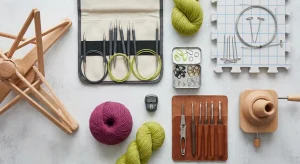
Ready to move beyond the basics and add a touch of sophistication to your projects? Exploring advanced knitting stitches can transform your work from simple to stunning. While garter and stockinette stitches form the foundation, delving into more intricate patterns opens up a world of creative possibilities, adding texture, depth, and unique visual appeal to your hand-knitted items. This guide will introduce you to a few popular advanced stitches that will elevate your knitting skills.
Unveiling Advanced Knitting Stitches
Advanced knitting stitches often involve combinations of knits, purls, increases, and decreases, sometimes worked over multiple rows to create complex textures or cables. For instance, the cable stitch, a perennial favorite, creates raised, twisted patterns that look incredibly impressive. It involves holding stitches on a cable needle and knitting them out of order, resulting in a beautiful braided effect. Another captivating stitch is the lace pattern, which uses yarn overs and decreases to create delicate, openwork designs. These can range from simple eyelets to elaborate, intricate motifs that resemble fine fabric. Learning these stitches requires patience and attention to detail, but the results are incredibly rewarding, adding a professional finish to your scarves, sweaters, and blankets.
Incorporating Texture and Design with Advanced Knitting Stitches
Beyond cables and lace, consider exploring mosaic knitting or intarsia for colorwork without carrying yarn across the entire row. Mosaic knitting uses slipped stitches to create patterns with two colors per row, while intarsia allows for large blocks of color without floats. These techniques, while more involved, provide incredible opportunities for design and personalization. Practicing with swatches is key before committing to a larger project. Start with smaller items like dishcloths or mug cozies to build confidence with your chosen advanced stitch. As you gain proficiency, you’ll find that these stitches aren’t just techniques; they’re tools for artistic expression.
Mastering advanced knitting stitches is a journey of continuous learning and creativity. Each new stitch you learn adds another dimension to your crafting repertoire, allowing you to tackle more ambitious projects and express your unique style. Embrace the challenge, enjoy the process, and watch your knitting skills flourish.
The Allure of Cable Knitting: A Deeper Look
Cable knitting is perhaps one of the most recognizable and admired forms of knitting stitches. Its distinctive twisted patterns create a luxurious, dimensional fabric. Indeed, cables can range from simple two-stitch twists to complex arrangements involving many stitches crossing over each other. To begin, you will need a cable needle, which is a short, double-pointed needle used to hold stitches temporarily. This allows you to reorder the stitches, forming the characteristic braided look. Furthermore, understanding how to read a cable chart is essential for more intricate designs. Many resources are available to help you interpret these charts effectively. Ultimately, the beauty of cable patterns lies in their ability to add significant visual interest and warmth to garments.
When working with cables, yarn choice plays a crucial role. For example, a smooth, worsted-weight wool will highlight the texture of the cables beautifully, making the twists distinct. Conversely, a highly textured or variegated yarn might obscure the cable definition. Remember, blocking your finished cable projects will also help the stitches relax and the cables to truly pop. You can explore various cable patterns, from simple rope cables to more complex Aran patterns, which often combine different types of cables in one design. Consequently, practicing different cable techniques will significantly enhance your understanding of these advanced knitting stitches.
Exploring the Elegance of Lace Knitting
Lace knitting, in contrast to cables, focuses on creating open, airy fabrics through a combination of yarn overs and decreases. This technique results in delicate, often intricate patterns that are perfect for shawls, scarves, and lightweight garments. While it might seem daunting at first, lace knitting follows predictable patterns. Typically, a lace pattern involves a ‘set-up’ row or rows, followed by a repeat of a specific chart or written instructions. Learning to read lace charts is highly beneficial, as they visually represent the stitches and their placement. Moreover, understanding how yarn overs create holes and decreases close them up is fundamental to successful lace knitting.
Blocking is absolutely essential for lace projects. It opens up the lace patterns, evens out the stitches, and gives the fabric its intended drape and shape. Without proper blocking, lace can appear crumpled and indistinct. There are countless lace patterns to discover, from simple faggoting to elaborate Shetland lace motifs. Many knitters find the rhythmic nature of lace knitting quite meditative. As you gain experience, you will appreciate the subtle artistry involved in creating these beautiful and often complex knitting patterns. Therefore, don’t be afraid to experiment with different yarn weights and fibers to see how they impact the appearance of your lace designs.
Mastering Mosaic and Intarsia for Colorwork
For those interested in adding color without the complexity of stranded colorwork, mosaic knitting and intarsia offer fantastic alternatives. Mosaic knitting, for instance, uses slipped stitches to create patterns using only one color per row. This means you only ever work with one color of yarn at a time, simplifying the process significantly. The patterns emerge from slipping stitches from the previous row, creating an illusion of intricate color changes. This technique is especially good for geometric designs and offers a relatively easy entry point into colorwork. Furthermore, it creates a slightly thicker fabric, which can be desirable for certain projects.
Intarsia, on the other hand, allows for large blocks of color within a single row. Unlike stranded knitting, where you carry unused colors across the back of your work, intarsia uses separate balls or bobbins of yarn for each color block. This avoids floats on the wrong side of the fabric, making it ideal for pictorial designs or color-blocked garments. While it requires managing multiple yarn sources, the clean finish on both sides of the fabric is a significant advantage. Learning how to twist yarns at color changes to prevent holes is a key skill in intarsia. Both mosaic knitting and intarsia are excellent ways to explore color in your projects, moving beyond solid colors to create stunning visual effects with these advanced knitting stitches.
Brioche Stitch: Adding Loft and Reversibility
The brioche stitch creates a lofty, reversible, and very squishy fabric. It is known for its distinctive ribbed texture, which looks similar on both sides. This makes it an excellent choice for scarves, cowls, and blankets where both sides of the fabric will be visible. Brioche typically involves knitting into the stitch below the one on your needle, often combined with yarn overs. While it might seem a bit tricky at first glance, once you understand the basic mechanics, it becomes quite intuitive. Many knitters find the process of creating brioche fabric very satisfying due to its unique texture and elasticity. Consequently, it is considered one of the more rewarding advanced knitting stitches to learn.
There are several variations of brioche, including one-color brioche and two-color brioche. Two-color brioche is particularly striking, as it creates a different color pattern on each side of the fabric, adding another layer of visual interest. Learning brioche requires attention to detail, especially when picking up dropped stitches, but the effort is well worth it for the beautiful results. Choosing the right knitting needles can also impact your brioche project; many prefer circular needles for the ease of working back and forth. Overall, brioche adds a luxurious feel to any project and is a truly impressive addition to your repertoire of advanced knitting stitches.
Textural Stitches Beyond the Basics
Beyond cables, lace, and brioche, a vast world of other textural stitches awaits exploration. For instance, the bobble stitch creates raised, spherical bumps on the fabric, adding a playful and tactile element. Bobbles are formed by working several stitches into one stitch, then decreasing them back down, resulting in a pronounced three-dimensional effect. Similarly, the popcorn stitch offers a similar, yet slightly flatter, raised texture. These stitches are perfect for adding accents to garments, creating interesting borders, or making unique baby blankets. Therefore, experimenting with these types of advanced knitting stitches can truly bring your designs to life.
Another category includes various ripple or wave patterns. These stitches use increases and decreases to create undulating lines and textures across the fabric. They can be simple, using basic knit and purl combinations, or more complex, incorporating lace elements. Ripple patterns are particularly effective in blankets and throws, where the repetitive motion creates a soothing visual effect. Furthermore, seed stitch and moss stitch, while often considered basic, can be combined in inventive ways to create more intricate textured fabrics. Many designers also develop their own unique textural patterns, constantly pushing the boundaries of what is possible with needles and yarn. These creative applications of advanced knitting stitches offer endless possibilities.
Working with Difficult Yarns and Materials
As you progress to more advanced knitting stitches, you might also find yourself working with more challenging yarns. For example, mohair or alpaca can be incredibly soft and luxurious but can also be slippery or difficult to unravel if you make a mistake. Similarly, working with very fine lace-weight yarns demands precision and a light hand. Understanding how different fibers behave is key to successfully executing complex patterns. Silk and linen, for instance, have less elasticity than wool, which can affect the drape and stitch definition of your project. Consequently, always swatch with your chosen yarn and needle combination before starting a large project.
Furthermore, some projects might require working with unusual materials, such as beads or wire. Incorporating beads into your knitting can add sparkle and weight to lace projects, creating a truly unique fabric. This often involves using a small crochet hook to pull the yarn through the bead before knitting the stitch. While it adds an extra step, the results are stunning. Experimenting with these materials expands your creative horizons and allows you to produce truly bespoke items. Therefore, embracing the challenge of different yarns and materials is part of mastering advanced knitting stitches.
Resources for Learning and Practice
Embarking on the journey to master advanced knitting stitches requires good resources. Online tutorials, video demonstrations, and comprehensive stitch dictionaries are invaluable. Websites like Ravelry offer a vast database of patterns and a supportive community where you can ask questions and share your progress. YouTube channels dedicated to knitting often provide step-by-step visual guides for complex techniques, which can be incredibly helpful when learning a new stitch. Moreover, local yarn stores frequently host workshops and classes where you can receive hands-on instruction from experienced knitters. These in-person sessions can provide personalized feedback and accelerate your learning.
Investing in a good knitting stitch dictionary is also highly recommended. These books often include charts, written instructions, and photographs for hundreds of different stitches, becoming an indispensable reference tool. Practice is paramount, so don’t be afraid to make mistakes. Every error is an opportunity to learn and improve. Starting with small swatches or simple projects like dishcloths or washcloths allows you to focus on the stitch technique without the pressure of completing a large item. As you build confidence, you can then tackle more ambitious projects that incorporate multiple advanced knitting stitches. Regularly challenging yourself with new patterns will keep your knitting journey exciting and rewarding. You can also find many helpful guides on sites like The Spruce Crafts for further inspiration and instruction.
Conclusion
Mastering advanced knitting stitches is a fulfilling journey that significantly broadens your creative horizons. From the intricate twists of cables to the delicate openness of lace, the rich textures of brioche, and the clever colorwork of mosaic and intarsia, each new technique adds depth and sophistication to your handmade items. Remember that patience, practice, and a willingness to learn are your best tools. Embrace the challenge, explore new patterns, and enjoy the process of transforming yarn into beautiful, unique creations. Your knitting skills will undoubtedly flourish as you continue to explore the endless possibilities that advanced knitting stitches offer. Keep knitting, keep learning, and keep creating with Knit n Style!
FAQ
What are some good complex knitting patterns for experienced knitters?
Experienced knitters often enjoy exploring cable patterns, intricate lace designs, brioche stitch variations, and advanced colorwork techniques like intarsia or mosaic knitting. These techniques offer a rewarding challenge and produce stunning results.
How can I improve my knitting skills beyond the basics?
To improve your skills, try learning new techniques such as reading charts, incorporating increases and decreases creatively, and experimenting with different yarn weights and fibers. Practicing with swatches and watching video tutorials can also be very beneficial.
What materials do I need for more intricate knitting projects?
For more intricate projects, you might need specialized tools like cable needles for cables, stitch markers for complex repeats, and possibly bobbins for intarsia. Additionally, a good stitch dictionary and quality yarn are always helpful.
Is it difficult to learn new knitting techniques?
Learning new knitting techniques can be challenging at first, but with patience and practice, it becomes much easier. Break down complex stitches into smaller steps, and don’t be afraid to make mistakes. Many online resources and communities are available to support your learning.
How do I choose the right project for an advanced stitch?
When choosing a project for a new advanced stitch, start with something small, like a dishcloth, scarf, or mug cozy. This allows you to focus on mastering the technique without the pressure of a large garment. Once you’re comfortable, you can move on to larger, more ambitious items.