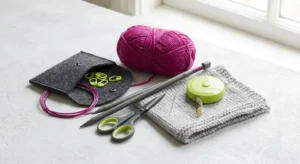
Have you ever found a pattern you love, but wished it was just a little bit different? Perhaps you want to change the size, add a unique detail, or use a different yarn weight. The ability to customize your projects through pattern modification is an advanced skill that truly elevates your crafting. It transforms you from a pattern follower into a creative designer. This allows you to bring your unique vision to life. At Knit n Style, we encourage continuous learning. We provide the resources to help you confidently adapt any knitting or crochet pattern.
Why Modify Patterns?
Pattern modification offers numerous benefits. First, it ensures a perfect fit. You can adjust garments to your exact measurements. This guarantees a flattering and comfortable result. Second, it allows for personalization. Infuse your unique style into every project, making it truly one-of-a-kind. Third, it enables yarn substitution. Use that special skein of yarn you’ve been saving. This is possible even if it’s not the one specified in the pattern. Moreover, it helps with problem solving. Adapt patterns to account for gauge differences or unexpected design challenges. Finally, it fosters creative expression. Experiment with new stitches, colors, or construction methods. This deeper engagement with your craft is known to benefit mental wellness and self-esteem.
Essential Concepts for Pattern Modification
Before you begin altering a pattern, familiarize yourself with these core concepts. Understanding them will make your modification efforts more successful.
1. Understanding Gauge
Gauge is the cornerstone of successful modification. It refers to the number of stitches and rows per inch (or centimeter) in a given yarn and stitch pattern. If your gauge doesn’t match the pattern’s, your finished object will be a different size. Learning to adjust for gauge is often the first step in successful pattern alteration. Knit n Style offers free guides on how to swatch effectively and calculate gauge. This crucial step ensures your project turns out as intended.
2. Basic Math and Proportions
Modifying a pattern often involves simple arithmetic. You will need to calculate stitch counts, row counts, and percentages to scale a pattern up or down. For example, if you want to make a sweater two sizes larger, you will need to know how many additional stitches to add to the circumference. You will also need to know how many extra rows for length, while maintaining the overall proportions of the design. This mathematical approach is key to proportionate changes.
3. Deconstructing a Pattern
Look at a pattern not just as instructions, but as a series of shapes and techniques. Identify the basic construction, such as top-down, bottom-up, or seamed pieces. Understand how each section contributes to the overall design. This holistic view helps you pinpoint where and how to make changes without compromising the integrity of the piece. Consequently, your modifications will integrate seamlessly.
Practical Pattern Modification Techniques
Here are some common ways you can modify patterns. These techniques will help you achieve your desired results.
1. Changing Size
For garments, use your gauge swatch to calculate the desired stitch count for your target circumference. Distribute increases or decreases evenly. For length, simply add or subtract rows as needed. Remember to consider how these changes affect other elements, like armhole depth or neck shaping. You can find more detailed guidance on All You Need to Know About Knitting Patterns and More. Similarly, for crochet projects, adjusting the initial chain and subsequent row counts is essential for size changes. Always re-measure as you go to ensure accuracy.
2. Adjusting Yarn Weight or Fiber
When changing yarn, a swatch is absolutely critical. A different yarn weight will almost certainly alter your gauge. You may need to change your needle or hook size to achieve the pattern’s original gauge. Sometimes, you might embrace the gauge change and recalculate the entire pattern based on your new gauge. Consider the drape and elasticity of the new fiber too. For instance, a cotton yarn behaves differently than a wool blend. This impacts the final look and feel of your modified piece. Learn more about yarn types and their properties to make informed choices.
3. Modifying Design Elements
- Necklines: Easily change a crew neck to a V-neck or scoop neck by adjusting the shaping decreases or increases.
- Sleeves: Convert set-in sleeves to raglan or vice versa. This requires a deeper understanding of garment construction. Alternatively, change sleeve length or add cuffs.
- Borders/Edgings: Substitute a simple garter stitch border with a lace pattern. Or add a ribbed cuff to a sweater. This is a straightforward way to personalize a project.
- Colorwork: Introduce stripes, fair isle, or intarsia patterns where none existed. Chart your desired design on graph paper for best results.
These adjustments allow for significant personalization without completely reinventing the wheel. The ability to make these changes effectively is a hallmark of true pattern modification skill.
Advanced Pattern Modification Strategies
Once you are comfortable with basic modifications, you can explore more advanced techniques. These strategies require a deeper understanding of garment construction and design principles. Nevertheless, they open up even greater creative possibilities.
1. Combining Elements from Multiple Patterns
This advanced technique involves taking a sleeve from one pattern, a body from another, and a collar from a third, then combining them into a cohesive new design. This requires careful consideration of gauge, shaping rates, and seams. You must ensure all pieces fit together harmoniously. It’s like being a culinary chef, taking the best ingredients from different recipes to create a signature dish. This level of pattern modification truly showcases your mastery.
2. Designing Your Own Elements
Instead of modifying existing elements, you can design entirely new ones. This could be a unique stitch pattern for a hat, a custom lace panel for a scarf, or a completely new pocket design for a cardigan. This involves charting your own stitch patterns, calculating increases and decreases, and integrating them seamlessly into an existing structure. Resources like Knitting Stitches for Beginners – The Best Place to Start can help you develop your foundational stitch knowledge for this.
3. Adapting for Different Construction Methods
Transform a seamed sweater pattern into a seamless one, or convert a top-down design to a bottom-up approach. This involves re-envisioning the entire construction process. You will need to understand how different shaping techniques are applied in each method. This is a complex form of pattern modification that requires experience. However, the reward is a project that precisely matches your preferred construction style.
Tools and Resources for Successful Pattern Modification
Having the right tools and resources at your disposal makes pattern modification much easier. Equip yourself with these essentials.
1. Swatch Tools
A good ruler or gauge tool is indispensable for accurately measuring your swatches. Stitch markers are also helpful for keeping track of your rows and stitches. A calculator will assist with the arithmetic involved in scaling patterns. These simple tools are fundamental to accurate pattern modification.
2. Reference Books and Online Guides
Invest in comprehensive knitting and crochet reference books. These often contain stitch dictionaries, shaping formulas, and detailed explanations of garment construction. Knit n Style also offers a wealth of free online guides and tutorials. These resources can help you understand specific techniques or calculations. For instance, our guide on A Quick Guide to Crochet Stitches and Techniques can be very helpful.
3. Project Management
Keep detailed notes of all your modifications. This includes changes to stitch counts, row counts, needle/hook sizes, and any design alterations. A project notebook or digital app can be invaluable for this. This record keeping is especially important if you plan to replicate your modified design. Furthermore, it helps you learn from each project and refine your pattern modification skills.
4. Online Communities and Forums
Engage with other crafters in online communities. Websites like Ravelry, for example, have active forums where you can ask questions, share your modifications, and get advice from experienced designers. (Ravelry.com is an excellent external resource for knitters and crocheters.) Learning from others’ experiences can provide new insights and solutions to common modification challenges. This collaborative environment fosters growth and confidence.
Common Pitfalls and How to Avoid Them
Even experienced crafters encounter challenges during pattern modification. Knowing common pitfalls can help you avoid them.
1. Skipping the Swatch
This is arguably the biggest mistake. Without an accurate swatch, any modifications you make are based on guesswork. The result will likely be a garment that doesn’t fit or look as intended. Always swatch, and wash/block your swatch as you would the finished item. This provides the most accurate gauge measurement.
2. Not Planning Ahead
Jumping into modifications without a clear plan can lead to unraveling and frustration. Sketch out your ideas. Make notes on the pattern itself. Calculate your changes before you start knitting or crocheting. A little planning goes a long way in successful pattern modification.
3. Over-Modifying Too Soon
If you’re new to pattern modification, start with small, manageable changes. Don’t try to redesign an entire sweater on your first attempt. Begin with simple size adjustments or minor design tweaks. Gradually build your confidence and skill before tackling more complex alterations. This incremental approach ensures a more positive learning experience.
4. Ignoring Proportions
When changing size or adding elements, it’s easy to distort the original proportions of the design. Step back regularly and assess your work. Does the new sleeve still look balanced with the body? Does the added length make the garment look awkward? Maintaining aesthetic balance is crucial for a professional-looking finished object. This awareness is a key aspect of successful pattern modification.
Embracing Your Inner Designer
Pattern modification is more than just changing instructions; it’s about embracing your creativity and making your craft truly your own. It empowers you to overcome limitations and bring your unique vision to life. As you gain experience, you’ll find yourself looking at patterns with a designer’s eye, always thinking about how to adapt them. This continuous learning process is deeply rewarding. Remember, every stitch is an opportunity for expression. Do not be afraid to experiment. With practice and patience, you’ll confidently tackle any desired alteration. This journey of customization will enrich your crafting experience immensely. Explore the vast world of yarn with our guide on A Trusted Yarn for More Than 3/4 of a Century – Red Heart, which can inspire new choices for your modified projects.
Ultimately, pattern modification transforms you from a follower to a creator. It allows for endless possibilities in your knitting and crochet journey. So grab your needles or hook, a favorite pattern, and start exploring the exciting world of customization. You can create truly unique and meaningful handmade items. One more thing to consider when choosing your tools, is finding the best set of knitting needles for your project.
FAQ: Customizing Your Knitting & Crochet Projects
What is the easiest way to start customizing a pattern?
The easiest way to begin customizing is by making small size adjustments, such as changing the length of a scarf or adding a few rows to a sweater body. You can also try simple color changes or substituting a basic border with a different stitch pattern.
How important is gauge when making pattern adjustments?
Gauge is extremely important. It dictates the final size of your project. If your gauge doesn’t match the pattern’s, even minor changes can result in a significant difference in the finished item’s dimensions. Always swatch and adjust your needle or hook size if necessary.
Can I really use any yarn I want for a pattern?
While you can use different yarns, it’s crucial to swatch and ensure your gauge matches. Also, consider the yarn’s fiber content and drape. A yarn with different properties might not achieve the same look or feel as the original. For example, a crisp cotton will behave differently than a soft merino wool. For more information on different fibers, consult textile and yarn resources like those found on Yarn.com’s Fiber Glossary.
What if my modified project doesn’t turn out as expected?
Don’t be discouraged! Every crafting experience is a learning opportunity. Analyze what went wrong, take notes, and apply those lessons to your next project. Unraveling and redoing sections is a common part of the creative process, especially when you are learning to adapt patterns.
How can I keep track of all my changes when altering a pattern?
It’s highly recommended to keep a dedicated project notebook or use a digital app. Write down all your modifications, including stitch counts, row numbers, and any design changes. This helps you stay organized, avoids confusion, and creates a valuable reference for future projects or if you wish to repeat the customized item.