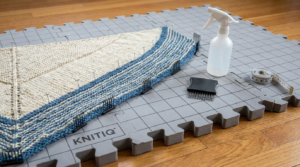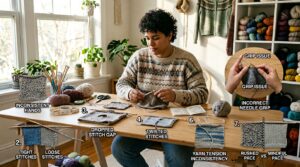
Embarking on a new craft like knitting can feel exciting, yet often a little overwhelming when faced with the vast array of tools available. What do you really need to get started? The good news is, you don’t need much! Understanding the essential knitting tools for beginners is key to a smooth and enjoyable start. At Knit n Style, we believe in keeping it simple and accessible, so let’s break down your first craft kit to ensure you’re ready to cast on with confidence.
Demystifying Your First Knitting Supplies
When you walk into a craft store or browse online, the sheer volume of knitting needles, hooks, and notions can be daunting. But for a true beginner, the list of ‘must-haves’ is surprisingly short. Our goal is to equip you with exactly what you need to learn the basics without unnecessary expense or confusion. Focus on these core items, and you’ll be well on your way to creating your first knitted piece.
Your Absolute Must-Haves: The Basic Knitting Equipment
Forget the fancy gadgets for now. Here are the core items that form the foundation of any beginner’s knitting toolkit:
1. Knitting Needles
This is where the magic happens! For your first projects, straight needles are often recommended. They are easy to handle and perfect for flat pieces like scarves or washcloths. What size? Most beginner patterns call for medium-weight yarn (often labeled ‘worsted’ or ‘Aran’), which typically uses needles in the US size 7 (4.5mm) to US size 9 (5.5mm) range. A good starting point is a US size 8 (5mm) needle. Material-wise, bamboo or wood needles offer a good grip, preventing stitches from slipping off too easily, which is a common beginner frustration. Metal needles are faster but can be slippery for new crafters. For more details on choosing the right tools, explore our guide on the best set of knitting needles.
2. Yarn
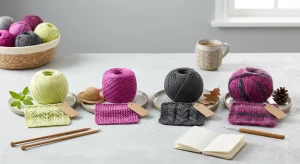
Choosing your first yarn is exciting! For beginner knitting supplies, opt for a light-colored, smooth, medium-weight yarn (worsted/Aran). Avoid novelty yarns, dark colors, or highly textured yarns (like boucle or fuzzy blends) as they can make it difficult to see your stitches and identify mistakes. Acrylic yarn is an excellent choice for beginners because it’s affordable, durable, and easy to care for. Plus, it’s forgiving if you need to unravel and re-knit sections.
3. Scissors
Simple, sharp scissors are indispensable for cutting your yarn. You don’t need anything fancy – a small pair of craft scissors will do perfectly. Keep them dedicated to yarn to maintain their sharpness.
4. Tapestry Needle (or Yarn Needle)
After you’ve finished knitting, you’ll need to weave in your yarn ends to give your project a neat, professional look. A tapestry needle is a blunt-tipped needle with a large eye, specifically designed for this purpose. Its blunt tip won’t split your yarn, making the process much easier.
Nice-to-Haves for a Smoother Start: Your First Knitting Kit Enhancements
Once you have the essentials, these items can make your learning experience even more enjoyable and efficient. While not strictly necessary for your very first project, they are highly recommended additions to any beginner’s knitting kit.
5. Stitch Markers
Stitch markers are small rings or clips that you place on your knitting needles to mark specific stitches or sections of your work. They are incredibly helpful for keeping track of pattern repeats, increases, or decreases. For example, they can help you remember where a new section begins in a complex pattern. They are especially useful for projects worked in the round.
6. Row Counter
A row counter is a small device that helps you keep track of how many rows you’ve knitted. This is particularly useful for patterns that require you to knit a certain number of rows before making a change, such as shaping for garments. It can be a clicker counter worn on your finger or a dial counter that fits on your needle. This simple tool eliminates the need to manually count rows, preventing errors and frustration.
7. Measuring Tape or Ruler
Accurate measurements are crucial in knitting, especially as you progress to projects like garments or blankets. A flexible measuring tape or a small ruler allows you to check your gauge (the number of stitches and rows per inch) and ensure your project is the correct size. Checking your gauge is a fundamental step to ensure your finished item matches the pattern’s intended dimensions.
8. Project Bag
While not a knitting tool in itself, a project bag is a wonderful addition to your beginner’s knitting supplies. It helps keep your yarn, needles, and other notions organized and clean, whether you’re knitting at home or on the go. A simple tote bag or even a reusable grocery bag can serve this purpose perfectly.
Choosing the Right Yarn for Your First Projects
Selecting the right yarn is perhaps one of the most important decisions when assembling your starter knitting kit. As mentioned, a smooth, light-colored, medium-weight yarn is ideal. But let’s explore why this is so important.
Fiber Content: Acrylic yarn is widely recommended for beginners due to its affordability, durability, and ease of care. It’s also less prone to splitting than some natural fibers, which can be a common issue for new knitters. Wool is another excellent fiber, but it can be more expensive and some types can be splitty. Cotton is also a good option for washcloths and dishcloths, but it has less elasticity than wool or acrylic.
Color: Light colors (like cream, light blue, or pale pink) make it much easier to see individual stitches. This is vital when you are learning to identify knit and purl stitches, correct mistakes, or pick up dropped stitches. Darker colors can obscure stitch definition, making the learning process more challenging.
Weight: Medium-weight yarns, often labeled as Worsted (weight 4) or Aran, are the sweet spot for beginners. They are thick enough to work up quickly, yet not so bulky that they are difficult to handle. Finer yarns are harder to see, while super bulky yarns can be cumbersome and require very large needles. For a trusted brand, consider Red Heart yarn, a popular choice among crafters for its versatility.
Understanding Knitting Needle Types and Materials
Knitting needles come in various types and materials, each offering a unique knitting experience. For your essential knitting tools for beginners, straight needles are a solid starting point.
Straight Needles: These are the classic knitting needles, used for working flat pieces. They typically come in pairs and have a stopper at one end to prevent stitches from sliding off. They are excellent for scarves, blankets, and other rectangular projects.
Circular Needles: These needles consist of two needle tips connected by a flexible cable. They can be used to knit in the round (for hats, socks, sweaters) or for knitting large flat pieces where straight needles would be too long to manage. While not strictly part of the essential knitting tools for beginners, they become indispensable as you advance.
Double-Pointed Needles (DPNs): These are short, straight needles with points at both ends, typically sold in sets of four or five. They are used for knitting small circumferences in the round, such as socks, mittens, or the tops of hats. DPNs can be a bit tricky for absolute beginners, so it’s best to master straight needles first.
Materials:
- Bamboo/Wood: These are highly recommended for beginners. They offer excellent grip, preventing stitches from slipping off too easily. They are also warm to the touch and quiet to knit with.
- Metal: Metal needles, often made of aluminum or nickel-plated brass, are very slick, allowing stitches to glide quickly. This makes them popular with experienced knitters, but they can be challenging for beginners who are still getting a feel for tension.
- Plastic: Plastic needles are lightweight and affordable. They can be a good option for children or those sensitive to the feel of metal. However, they can sometimes be more flexible or less durable than other materials.
Getting Started with Your First Project
Once you have your essential knitting tools for beginners, it’s time to cast on! A simple garter stitch scarf or a basic washcloth is an excellent first project. These projects allow you to practice the fundamental techniques of casting on, knitting the garter stitch (knitting every row), and binding off, without the pressure of complex shaping or stitch patterns. Furthermore, you will naturally develop a consistent tension with practice. You can find many beginner-friendly patterns online. For guidance on foundational techniques, check out our resource on knitting stitches for beginners.
Remember, patience is key. Everyone makes mistakes when learning a new craft, and that’s perfectly normal. Don’t be afraid to unravel your work (this is called ‘frogging’) and start again if something isn’t quite right. Each time you practice, your skills will improve. The process of learning and creating is just as rewarding as the finished product. Indeed, many find the rhythmic motion of knitting to be very meditative.
For further inspiration and to connect with other knitters, consider joining online knitting communities or local knitting groups. These communities offer a wealth of advice, support, and shared passion for the craft. You can also find numerous free tutorials on platforms like YouTube, which provide visual demonstrations of techniques. For example, a quick search for ‘beginner knitting tutorials’ will yield many helpful videos. The Craft Yarn Council also provides valuable resources for learning to knit and crochet, including standard yarn weights and needle sizes. You can visit their website at craftyarncouncil.com for more information.
Maintaining Your Knitting Tools
Proper care of your knitting tools ensures they last a long time and remain a joy to use. Store your needles safely to prevent bending or breaking. Keep your yarn in a clean, dry place, away from direct sunlight or pests. A project bag is ideal for this. Regularly check your scissors for sharpness and clean them if they accumulate any residue. Taking good care of your supplies is an investment in your crafting journey. Furthermore, organizing your tools makes it easier to find what you need when you’re ready to start a new project. For instance, needle gauges are useful for identifying unmarked needles.
Expanding Your Knitting Horizons
As you gain confidence with your basic knitting equipment, you might want to explore more advanced techniques and tools. This could include learning new stitches, working with different yarn weights and fibers, or tackling more complex patterns. Consider exploring our guide on knitting patterns and more to inspire your next creation. Many knitters eventually experiment with circular needles for seamless projects or double-pointed needles for smaller items. You might also discover specialized notions like cable needles for creating textured cables or stitch holders for putting stitches on hold. These additions will further enhance your crafting capabilities.
The world of knitting is vast and full of creative possibilities. From cozy scarves to intricate sweaters, the only limit is your imagination. The journey begins with these fundamental knitting tools for beginners, but it certainly doesn’t end there. Enjoy every stitch!
Conclusion
Starting your knitting journey doesn’t require a huge investment or an overwhelming collection of tools. By focusing on the essential knitting tools for beginners – a good pair of needles, suitable yarn, sharp scissors, and a tapestry needle – you’ll have everything you need to cast on your first project. Adding stitch markers, a row counter, and a measuring tape will further enhance your experience. Remember, practice makes perfect, and every knit and purl stitch brings you closer to mastering this wonderful craft. At Knit n Style, we are here to support you every step of the way. Happy knitting!
FAQ
What are the absolute must-have items for a new knitter?
For an absolute beginner, the must-have items include a pair of straight knitting needles (US size 7-9), a skein of smooth, light-colored, medium-weight acrylic yarn, sharp scissors, and a tapestry needle for weaving in ends. These basic knitting supplies will allow you to complete your first simple projects.
What type of yarn is best for someone just learning to knit?
A smooth, light-colored, medium-weight (worsted/Aran) acrylic yarn is best for learning. Light colors help you see your stitches clearly, smooth texture prevents splitting, and medium weight is easy to handle. Acrylic is also affordable and forgiving for beginners.
Why are bamboo or wood needles often recommended for beginner knitters?
Bamboo or wood needles offer more grip than metal needles, which helps prevent stitches from slipping off too easily. This added friction provides better control for new knitters who are still developing consistent tension and stitch handling.
Do I need circular needles or double-pointed needles right away?
No, you do not need circular or double-pointed needles right away. Straight needles are perfect for your initial flat projects like scarves and washcloths. Circular and double-pointed needles are used for knitting in the round and can be added to your kit as you gain experience and want to tackle more complex projects.
What is a tapestry needle used for in knitting?
A tapestry needle, also known as a yarn needle, is used to weave in the loose yarn ends after you’ve finished knitting your project. It has a blunt tip and a large eye, making it easy to thread bulky yarn and protecting your stitches from being split as you weave.