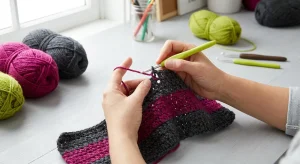
Every knitter wants smooth stitches and balanced fabric. However, maintaining even tension can be challenging, especially for beginners. Choosing the best yarn for knitting tension often makes a noticeable difference.
Different yarn fibers behave in unique ways. Some yarns stretch easily, while others remain firm and stable. Because of this, yarn choice directly affects stitch consistency.
Fortunately, understanding yarn characteristics helps knitters select materials that support better tension control. The right fiber improves stitch definition and reduces uneven knitting.
In this guide, you will discover how yarn affects tension, which fibers work best, and how to choose the best yarn for knitting tension for different projects.
Why Yarn Choice Affects Knitting Tension
Many knitters believe tension depends only on technique. Although technique matters, yarn structure plays an equally important role.
First, fiber elasticity influences how yarn behaves on needles. Stretchy yarns may tighten or loosen while knitting. In contrast, stable yarns maintain consistent shape.
Second, yarn texture affects how easily stitches slide. Smooth fibers move differently than fuzzy or textured ones.
Additionally, yarn weight impacts stitch control. Thicker yarns often make tension easier to see and adjust.
Because of these factors, selecting the best yarn for knitting tension can improve knitting accuracy and comfort.
Characteristics of Yarn That Improve Tension Control
Certain yarn qualities help knitters maintain steady stitches. Understanding these characteristics helps identify yarns that support consistent knitting.
Moderate Elasticity
Elastic yarn stretches slightly but returns to shape easily. This flexibility helps prevent overly tight stitches.
Wool blends often provide excellent elasticity. As a result, many knitters consider them the best yarn for knitting tension, especially during practice projects.
Smooth Surface Texture
Smooth yarn allows stitches to glide evenly along needles. This movement helps knitters maintain rhythm while working rows.
Cotton and merino wool frequently offer smooth textures that support consistent stitch formation.
Because of this, smooth yarn fibers often appear in recommendations for the best yarn for knitting tension.
Balanced Ply Structure
Ply refers to the number of strands twisted together to form yarn.
Well-balanced plies prevent yarn from splitting during knitting. Split yarn often causes uneven stitches.
Therefore, multi-ply yarns with tight twists often perform better when consistent tension matters.
Wool Yarns for Even Knitting Tension
Wool remains one of the most popular fibers for knitters. Its natural elasticity helps maintain balanced stitches.
Because wool stretches slightly, it accommodates small tension adjustments while knitting.
Merino Wool
Merino wool stands out for its softness and flexibility. It stretches easily but still returns to its original shape.
Consequently, many knitters consider merino the best yarn for knitting tension when learning new techniques.
Merino also produces excellent stitch definition. This clarity makes it easier to identify uneven stitches.
Highland Wool
Highland wool tends to feel slightly firmer than merino. However, its structure helps maintain consistent stitch formation.
This durability makes it useful for sweaters and larger garments.
Although it feels less soft, many knitters still consider it among the best yarn for knitting tension because it maintains structure well.
Cotton Yarn and Tension Control
Cotton behaves differently from wool. Instead of stretching, cotton remains relatively firm.
Because of this, cotton clearly shows stitch consistency.
Advantages of Cotton Yarn
Cotton yarn offers several benefits for tension practice:
Strong stitch definition
Stable fiber structure
Minimal stretching during knitting
Easy visibility of uneven stitches
These qualities help knitters develop better tension awareness.
However, cotton may feel less forgiving than wool. Tight knitters may need to relax their grip slightly.
Still, many knitters consider cotton the best yarn for knitting tension when focusing on technique improvement.
Acrylic Yarn for Budget-Friendly Practice
Acrylic yarn offers another useful option for practicing tension.
Although acrylic lacks natural elasticity, modern acrylic blends often mimic wool behavior.
Benefits of Acrylic Yarn
Acrylic yarn remains popular because it offers several advantages:
Affordable pricing
Wide availability
Consistent thickness
Easy care and washing
Because acrylic yarn costs less, knitters can practice extensively without worrying about expensive materials.
Consequently, some knitters choose acrylic when searching for the best yarn for knitting tension during beginner projects.
Potential Drawbacks
Despite its affordability, acrylic yarn may squeak on metal needles. This friction can affect knitting rhythm.
However, switching to wooden needles often solves this problem.
Yarn Weight and Its Impact on Tension
Yarn weight significantly affects tension control. Thicker yarns often make stitch patterns easier to see.
Worsted Weight Yarn
Worsted weight yarn provides excellent balance for most knitters.
It feels thick enough to handle easily but not bulky. Because of this balance, many knitters consider worsted the best yarn for knitting tension practice.
Worsted yarn also works well for scarves, hats, and beginner garments.
DK Weight Yarn
DK yarn appears slightly thinner than worsted. Although still manageable, it requires slightly more attention to tension.
Experienced knitters often prefer DK yarn for lightweight garments.
Nevertheless, beginners usually start with worsted before transitioning to lighter yarn weights.
Yarns That Can Make Tension Difficult
Not all yarns support even knitting. Some fibers complicate tension control, especially for beginners.
Novelty Yarns
Novelty yarns include boucle, eyelash, or textured fibers.
These yarns hide stitches and make it difficult to see uneven rows.
Because of this, they rarely qualify as the best yarn for knitting tension practice.
Very Slippery Fibers
Silk and bamboo yarns feel extremely smooth.
Although luxurious, they can slide too easily on needles. This slipperiness sometimes causes loose stitches.
As a result, beginners often find these fibers challenging.
Single-Ply Yarns
Single-ply yarns contain only one strand. They tend to twist while knitting.
This twisting can create inconsistent stitches.
Therefore, multi-ply yarns usually perform better when focusing on tension improvement.
How Needle Material Affects Yarn Tension
Needle material influences yarn movement and stitch control.
Metal needles allow yarn to slide quickly. Consequently, they may cause loose stitches for some knitters.
Wooden or bamboo needles create more friction. This grip helps maintain consistent tension.
Pairing the best yarn for knitting tension with appropriate needles often produces better results.
Experimenting with needle materials helps identify the best combination for your knitting style.
Tips for Maintaining Even Knitting Tension
Even with excellent yarn, technique still matters.
First, hold yarn loosely but consistently. Excessive grip tightens stitches unnecessarily.
Second, maintain steady hand movement. Smooth knitting rhythm promotes consistent loops.
Third, check stitches regularly while working rows. Early adjustments prevent larger mistakes later.
Additionally, practice projects using the best yarn for knitting tension help develop muscle memory.
Over time, consistent practice improves stitch control naturally.
Conclusion
Consistent knitting tension creates smooth, professional-looking fabric. Although technique plays a major role, yarn selection also matters.
Choosing the best yarn for knitting tension helps stabilize stitches and improve knitting rhythm. Fibers like wool, cotton, and quality acrylic provide excellent control for most knitters.
Furthermore, balanced ply structures and moderate elasticity support even stitch formation.
Avoid overly slippery or novelty yarns when practicing tension. Instead, focus on stable yarn fibers that clearly show stitch patterns.
With the right yarn and regular practice, knitters can gradually develop steady tension and enjoy more successful projects.
FAQ
1. Which yarn fiber helps beginners improve stitch consistency?
Wool blends often help beginners because they stretch slightly and return to shape easily during knitting.
2. Does yarn weight affect knitting control?
Yes. Thicker yarns like worsted weight make stitches easier to see, which helps knitters monitor tension.
3. Why do some yarns make stitches uneven?
Slippery or textured yarns can hide stitches or slide too quickly on needles, making tension harder to control.
4. Is cotton yarn good for learning knitting tension?
Yes. Cotton yarn shows stitch structure clearly, which helps knitters identify uneven rows.
5. Should beginners avoid novelty yarns?
Yes. Textured yarns often hide stitches, making it difficult to track tension and maintain consistent knitting patterns.