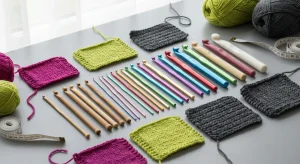
There’s nothing quite like the satisfaction of finishing your very first knitted item. It’s a tangible representation of your new skills, and a huge confidence booster! If you’ve recently learned to cast on and master the knit stitch, you’re perfectly ready for an easy knitting project dishcloth. This simple pattern uses only the garter stitch, making it perfect for practicing your tension and getting comfortable with the rhythm of knitting. Plus, you’ll end up with a practical item for your home or a thoughtful handmade gift!
Why a Dishcloth is the Perfect First Project
Many new knitters jump straight to scarves, but a dishcloth offers several advantages. First, it works up relatively fast, giving you that satisfying ‘finished object’ feeling without a huge time commitment. Moreover, it involves no complex shaping; it’s rectangular and straightforward. You can actually use it or give it away, making it more than just a practice swatch. Furthermore, if you make mistakes, it’s just a dishcloth, so there’s no pressure for perfection. Ultimately, this type of simple knitting project provides ample opportunity to practice consistent tension and familiarize yourself with the knit stitch.
Materials You’ll Need for Your First Knitted Dishcloth
Before you begin your knitting journey, gathering the right materials is essential. For this beginner-friendly project, you won’t need many items. Specifically, you will need yarn, knitting needles, and a couple of basic notions. Selecting the correct type of yarn and needles will make your experience much smoother and more enjoyable.
- Yarn: One ball of cotton worsted weight yarn (approximately 50-70 grams or 100-120 yards). Cotton is absorbent and durable, making it ideal for dishcloths. Choose a solid, light color to easily see your stitches, which is particularly helpful for beginners.
- Needles: One pair of 5.0mm (US 8) single-pointed knitting needles. If you only have circular needles, that’s perfectly fine! Simply knit back and forth as if they were straight needles. For more information on selecting the right tools, consider exploring our guide on the best set of knitting needles.
- Notions: Scissors and a tapestry needle for weaving in ends. These small tools are indispensable for finishing your project neatly.
Understanding the Simple Garter Stitch for Beginners
This pattern is designed for absolute beginners, focusing on simplicity and skill development. We will be using only the knit stitch. When worked on every row, the knit stitch creates garter stitch – a wonderfully textured, reversible fabric that lies flat and doesn’t curl. Consequently, it’s an excellent stitch for an easy knitting project dishcloth. This fundamental stitch is a cornerstone of knitting, and mastering it early on will build a strong foundation for future projects.
Gauge (Optional but Recommended)
While not critical for a dishcloth, understanding gauge is helpful for future projects. For this project, a comfortable gauge might be around 18 stitches and 36 rows = 4 inches (10 cm) in garter stitch. Don’t stress if yours is different; it just means your dishcloth will be slightly larger or smaller. Measuring your gauge helps ensure your finished item matches the pattern’s intended dimensions, which becomes more important with garments.
Instructions for Your Easy Knitting Project Dishcloth
Following these steps will guide you through creating your first knitted item. Take your time with each stage, focusing on consistency and comfort. Remember, knitting is a journey, and every stitch contributes to your learning. This simple knitted dishcloth is designed to be forgiving and fun.
- Cast On: Using the long-tail cast-on method (or your preferred cast-on method), cast on 40 stitches onto one of your knitting needles. It’s important not to cast on too tightly, or your first row will be difficult to knit. There are many resources available online to help you learn various cast-on techniques, such as this helpful guide from Dummies.com on the long-tail cast-on.
- Knit Every Row: Turn your work. Now, simply knit every stitch in every row until your dishcloth measures approximately 8 inches (20 cm) from the cast-on edge, or until you’re happy with the size. Remember, the knit stitch is worked by inserting your right needle into the front of the stitch from left to right, wrapping the yarn, pulling a loop through, and then slipping the old stitch off the left needle. Furthermore, a quick refresher on knitting stitches for beginners can be very beneficial here.
- Bind Off: Once your knitted piece reaches the desired length, it’s time to bind off your stitches. This secures the live stitches so your work doesn’t unravel. To bind off, knit two stitches. Then, using your left needle, lift the first knitted stitch over the second knitted stitch and off the right needle. Knit another stitch, and repeat the process: lift the first stitch over the second and off the needle. Continue this until only one loop remains on your right needle.
- Finish: Cut your yarn, leaving a tail of about 6 inches. Thread this tail through the remaining loop on your needle and pull it tight to secure it. Finally, use your tapestry needle to weave in both the cast-on and bind-off tails into the fabric of your finished knitted item. This creates a neat and professional finish.
Tips for Success with Your First Knitting Project
Embarking on your first knitting journey can be exciting, and a few pointers can make the process smoother. Specifically, focusing on consistency, understanding your yarn, and being patient with yourself are key. These tips will help ensure your simple knitted dishcloth turns out beautifully and builds your confidence for future projects.
- Maintain Even Tension: Try to keep your stitches consistent in size. This comes with practice, so don’t worry if your first few rows look a bit uneven. With continued practice on your knitted piece, your tension will naturally improve.
- Count Your Stitches: Periodically count your stitches to ensure you haven’t accidentally added or dropped any. If you find you have too many or too few, don’t fret; it’s a common beginner issue. You can usually fix it by carefully unraveling back to where the mistake occurred.
- Don’t Be Afraid to Make Mistakes: Everyone makes mistakes, especially when learning something new. The beauty of knitting is that most errors can be fixed. Think of them as learning opportunities.
- Take Breaks: If your hands get tired or you feel frustrated, take a break. Come back to your project with fresh eyes and renewed energy. This simple knitting project will be waiting for you.
- Watch Videos: If a step isn’t clear, search for video tutorials online. Seeing the technique in action can often clarify things better than written instructions alone. Websites like YouTube offer countless free resources for knitters.
Caring for Your Hand-Knitted Dishcloth
Once you’ve completed your easy knitting project dishcloth, you’ll want to keep it in great condition. Proper care ensures its longevity and effectiveness. Since it’s made from cotton, it’s quite durable, but a few simple steps can help it last even longer. Ultimately, taking good care of your handmade items adds to their value and enjoyment.
- Washing: Most cotton dishcloths can be machine washed on a gentle cycle with like colors. Use cool or warm water.
- Drying: You can machine dry on a low setting or lay flat to air dry. Air drying often helps maintain the shape and extends the life of your knitted items.
- Avoid Bleach: Bleach can weaken cotton fibers and fade colors. Stick to mild detergents.
- Regular Replacement: Like any dishcloth, handmade ones will eventually wear out. Enjoy it while it lasts, and then perhaps knit another one! This provides another opportunity to practice your skills on a simple knitted dishcloth.
Expanding Your Knitting Skills Beyond a Simple Dishcloth
Finishing an easy knitting project dishcloth is a significant accomplishment. It proves you have the foundational skills to tackle more complex patterns. Now that you’ve mastered the knit stitch and the garter stitch, a world of possibilities opens up. Consider what you might want to knit next. Perhaps another useful item for your home, or a gift for a loved one?
You might consider exploring other basic stitches. For instance, the purl stitch is the next fundamental stitch to learn. Once you understand the knit and purl stitches, you can create stockinette stitch, ribbing, and many other textures. These are all covered in our comprehensive guide to knitting stitches for beginners. Furthermore, you could try different types of yarn or needles to see how they affect your fabric.
As your confidence grows, you can start looking at more structured patterns. Scarves, simple hats, or even small bags are excellent next steps. These projects often introduce new techniques like increasing and decreasing, or working in the round. Remember, every project, including your first knitted dishcloth, builds upon the last. Keep practicing, keep learning, and most importantly, keep enjoying the process of creating with your hands. There are many knitting patterns available to inspire your next creation.
Conclusion: Celebrate Your First Knitted Achievement!
Congratulations! You have successfully completed your first knitted item: an easy knitting project dishcloth. This achievement is a testament to your dedication and growing skills. You’ve not only created a practical item but have also laid a solid foundation for your knitting journey. Remember the satisfaction of casting on, forming each stitch, and binding off to create something tangible. This process is truly rewarding.
Continue to practice your stitches and explore new techniques. Each project, no matter how small, adds to your experience and confidence. Whether you use your dishcloth in your own kitchen or gift it to a friend, it represents a significant milestone in your crafting adventure. Keep knitting, keep learning, and most importantly, keep enjoying the wonderful world of yarn and needles. The possibilities are endless!
FAQ
What type of yarn is best for a beginner’s knitted cloth?
Cotton worsted weight yarn is highly recommended for a beginner’s knitted cloth. It’s durable, absorbent, and easy to work with, making it perfect for practicing stitches. Additionally, it holds its shape well and is machine washable.
How long does it take to knit a simple dishcloth?
The time it takes to knit a simple dishcloth can vary based on your skill level and speed. For a complete beginner, it might take a few hours spread over a couple of days. More experienced knitters could complete one in an hour or two. The goal is enjoyment and practice, not speed.
Can I use circular needles for this easy beginner knitting project?
Yes, you can absolutely use circular needles for this easy beginner knitting project. Simply knit back and forth on them as if they were straight needles. Circular needles are versatile and can be used for both flat and in-the-round knitting projects.
What if my edges are uneven on my first knitted item?
Uneven edges are very common for beginners. Don’t worry about them! They will improve with practice as your tension becomes more consistent. Focus on forming even stitches in the main body of your simple knitted cloth. Blocking can also help slightly even out edges.
Are there other simple projects I can try after this first knitted piece?
Absolutely! After mastering this simple knitted piece, you can try other projects like a garter stitch scarf, a simple coaster, or even a small pot holder. These projects build on the same basic skills and introduce slight variations, helping you expand your repertoire.